What Are Kinetic Chain Checkpoints and Why Do They Matter?
Learn what the five kinetic chain checkpoints are, how trainers use them to improve form, and why they matter for injury prevention and performance.
Picture yourself setting up for a squat. Feet shoulder-width apart, chest lifted, hands braced. You start lowering down, and something feels off. Maybe your heels pop up. Maybe your knees cave inward. Maybe your shoulders round forward before you even realize it.
Slip-ups like these are why trainers talk about kinetic chain checkpoints. These checkpoints are alignment markers that help us see where movement goes right (and where it goes left).
Think of them as stoplights along the body. Each one needs to stay green for safe, efficient movement. If one turns red, the whole chain feels it.
Clients often ask us, “Why do you always look at my feet or remind me to keep my head steady?” This is the reason. By monitoring these checkpoints, we can identify breakdowns before they develop into bad habits or even injuries. The payoff is better form, smoother movement, and stronger results.
So let’s break it down: what are the five kinetic chain checkpoints, how do they work, and why are they worth paying attention to in every workout?
What Are the Five Kinetic Chain Checkpoints?

Think of the kinetic chain checkpoints as your fitness chakras.
At their core, the five kinetic chain checkpoints include:
- Feet and ankles
- Knees
- Hips
- Shoulders
- Head and cervical spine
These are the areas trainers monitor during exercises. If alignment slips at one checkpoint, it affects the rest. For example, if the knees cave in during a lunge, the hips shift awkwardly, the shoulders try to compensate, and the whole body feels out of sync.
Understanding the kinetic chain checkpoints
When people search “What are the five kinetic chain checkpoints?” they’re usually looking for a simple definition.
Here it is: checkpoints are positions on the body that show whether or not your posture and mechanics are solid.
The feet, knees, hips, shoulders, and head don’t work alone. They’re part of one long kinetic chain. Movement transfers upward and downward through this chain. If one link falters, the rest must adapt. Trainers use these markers to evaluate form, give feedback, and adjust programs.
How trainers use kinetic chain checkpoints
In practice, checkpoints act like a map.
Trainers watch each one as you squat, push, pull, or twist. If something looks off, we cue corrections: push through the heels, brace the core, and pull the shoulders back. Each adjustment keeps the checkpoints in place, making movement more efficient.
It’s not just about preventing injury, though that certainly matters. It’s also about performance. Aligned checkpoints result in stronger lifts, smoother running form, and improved control during high-intensity moves. That’s why we keep circling back to them in every session.
Are there five or six kinetic chain checkpoints?
While we referenced only five checkpoints, you might see six listed in some textbooks or articles. That’s because some experts categorize the lumbar spine or pelvis separately. Most practical coaching models use five. Both versions are talking about the same chain, just organized slightly differently.
So if you hear about six kinetic chain checkpoints, know that it’s essentially the same system. The important takeaway is that we always assess the body from the ground up: starting with the feet, then the knees, hips, shoulders, and finally the head.
Breaking Down the 5 Kinetic Chain Checkpoints
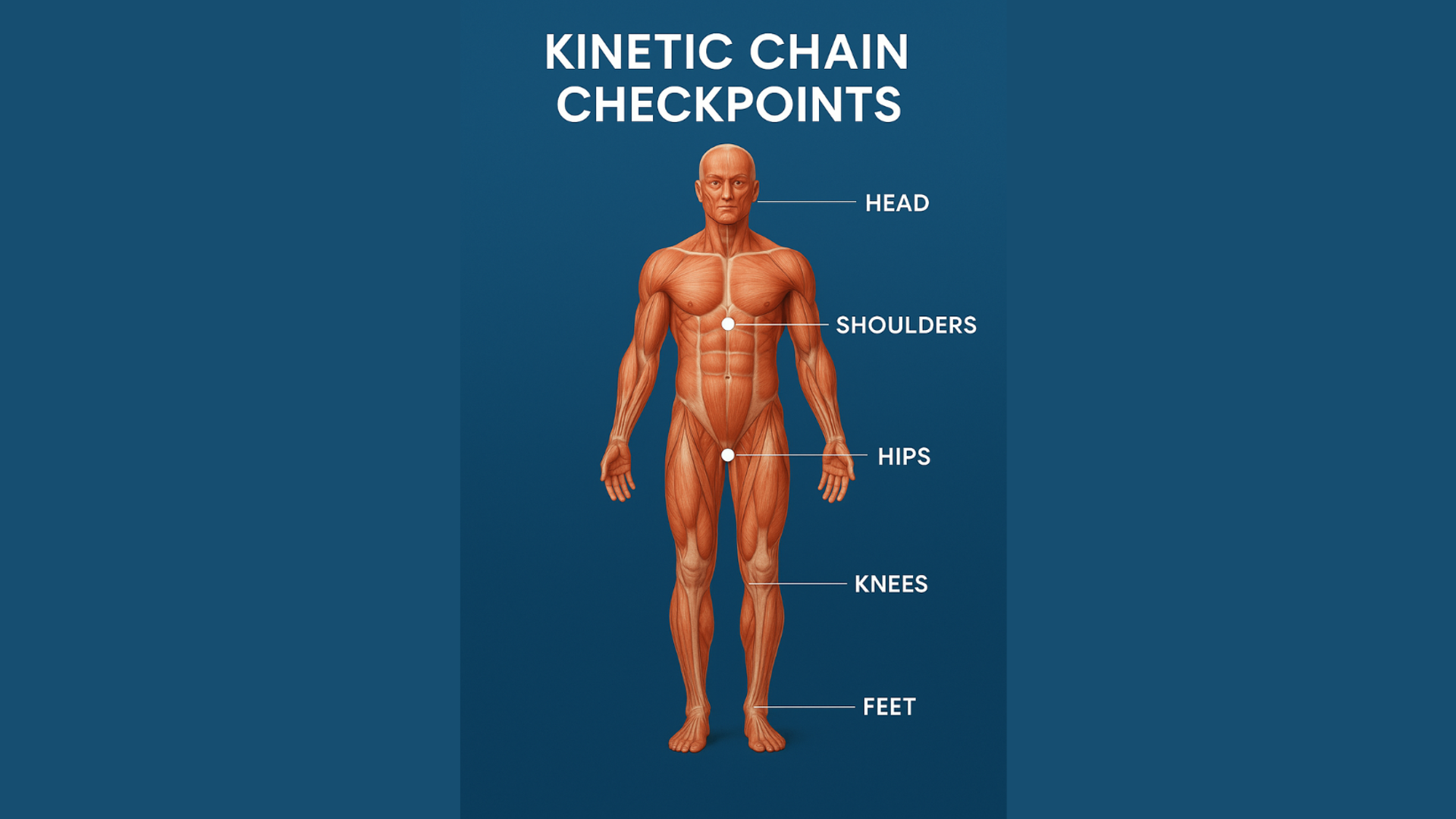
Each checkpoint plays an important role. When they remain aligned, movement feels smooth. When it drifts, strain builds up. Here’s how each one works and why it matters:
Feet and ankles
The foundation of every movement. If your feet collapse inward or your ankles roll outward, everything above has to compensate. In squats, that might mean knees drifting inward. In running, it might mean shins aching. Trainers watch the feet to make sure they stay straight ahead and grounded.
Strong arches, steady ankle mobility, and good shoe support all play into this checkpoint. Simple cues like “spread the toes” or “press through the heels” make a noticeable difference in stability.
Knees
The knees act like hinges. They should track in line with the second toe during most lower-body movements. When they drift inward (something we see often), stress builds in the ligaments and hips.
Knee alignment also affects how power transfers upward. Stable knees mean stronger pushes, steadier landings, and fewer awkward twists. Trainers constantly check this checkpoint, especially during squats, lunges, and jumps.
Hips
The hips are the powerhouse. They drive strength in lifts, stabilize the pelvis, and connect upper and lower body mechanics. Misaligned hips show up in a lot of ways: one side rotating forward, tilting, or sagging under load.
When hips stay square, energy flows evenly. Deadlifts feel smoother, core engagement improves, and posture holds steady. Trainers cue hips constantly because they dictate so much of what happens above and below the waist.
Shoulders
Think of shoulders as the steering wheel for the upper body. If they roll forward, they pull the chest down and strain the spine. If they shrug upward, tension creeps into the neck. Stable, retracted shoulders create room for the chest to open and the arms to move freely.
During pushes and pulls, aligned shoulders reduce injury risk and increase strength. Trainers look for level shoulders that stay anchored without rounding or tilting.
Head and cervical spine
The final checkpoint is the head and cervical spine, which is often overlooked.
Head position sets the tone for the spine. Tilt too far forward, and posture collapses. Look up too high, and tension builds in the neck. Neutral alignment maintains a balanced chain from top to bottom.
A common cue is “tuck the chin slightly” to keep the head in line with the spine. A simple form hack, but a powerful one. Clients often notice their whole posture improves once they fix their head position.
Why Kinetic Chain Checkpoints Matter in Training

It’s easy to think of alignment cues as small details. Feet slightly out of line, shoulders rolled forward, chin tilted too high…they all seem minor in the moment. But when those details repeat over hundreds of reps, that’s when aches build and performance suffers.
Trainers use kinetic chain checkpoints as guideposts. When the five markers stay aligned, the body moves with more efficiency. Energy transfers smoothly, muscles share the workload, and joints stay supported.
When they fall out of place, the chain breaks down. One area strains to cover for another, and eventually, discomfort follows.
Better performance
Good form makes strength and power more achievable.
A squat with steady feet, stable knees, and square hips generates more force than a squat where everything wobbles. Runners feel faster when their shoulders stay back and their heads are balanced, because their lungs open up and their stride mechanics improve.
That’s the hidden power of checkpoints. Performance gains don’t come from just lifting heavier or running farther. They come from moving more effectively. Clients often tell us they feel stronger without adding weight to the bar, and it’s usually because their alignment is improved first.
Injury prevention
Most people first hear about checkpoints after dealing with some kind of ache. Maybe knees hurt after long runs. Maybe the lower back feels tight after squats. Those signals often trace back to alignment issues.
When trainers correct checkpoints, the stress redistributes. Knees stop taking all the load. Hips engage the way they’re supposed to. Shoulders stay anchored instead of collapsing forward. Injuries don’t disappear altogether, but the risk drops dramatically.
We remind clients of this often: it’s not about chasing perfect posture every second of the day. It’s about practicing solid alignment during movement, so the body learns to default to safer, stronger mechanics.
Practical application
So, what are the five kinetic chain checkpoints to observe during exercise?
Feet and ankles, knees, hips, shoulders, and head. Each one has a specific function. Trainers check them in real time, cue corrections, and adjust programming when patterns emerge.
Even small tweaks make a difference. Pushing through the heels steadies the knees. Engaging the hips steadies the back. Leveling the shoulders keeps pressing movements safe. Over time, these corrections become habits.
Kinetic Chain Checkpoints and Kettlebell Training
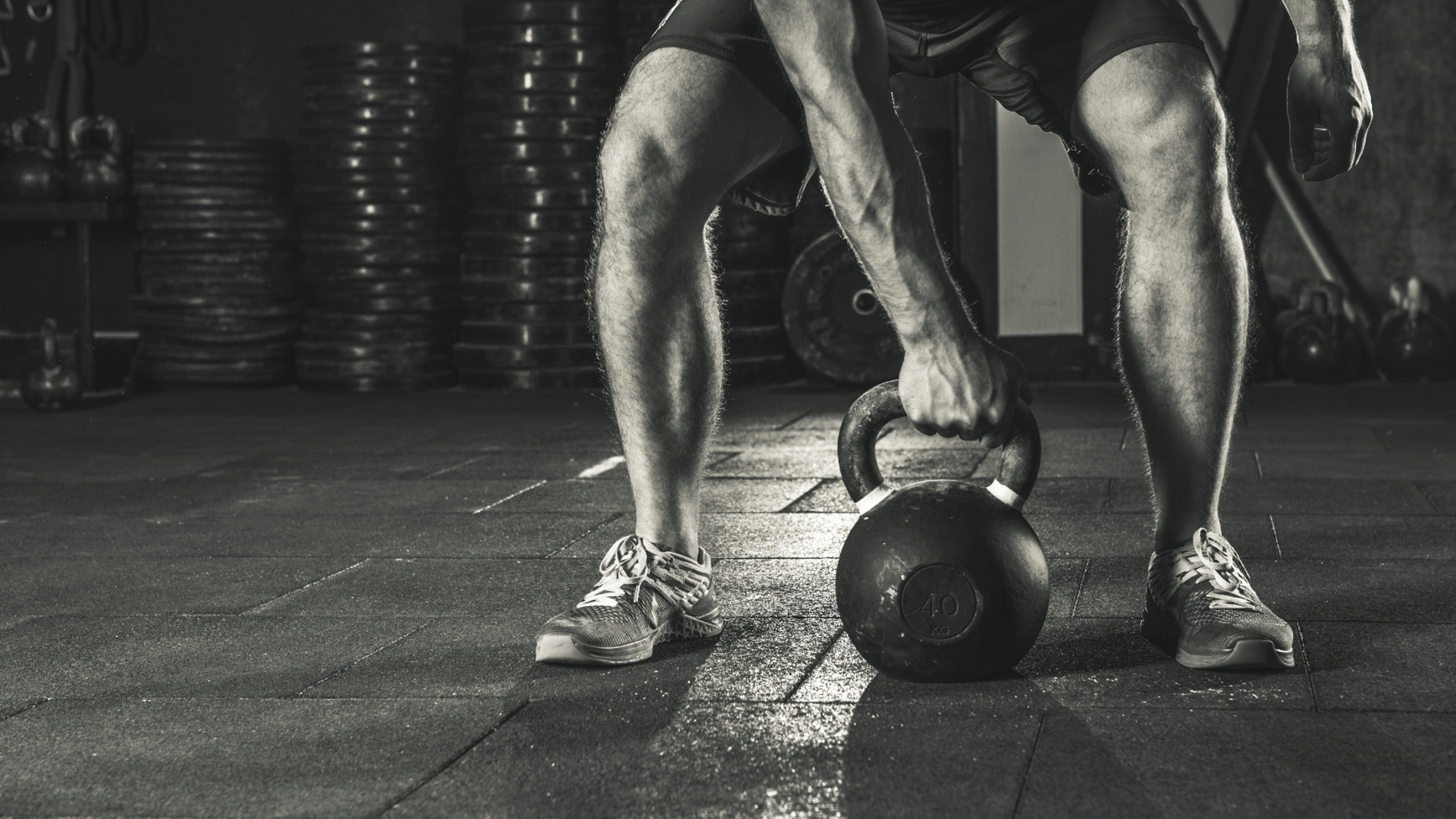
Kettlebells are a favorite tool for exposing alignment. They move dynamically, shift weight quickly, and challenge balance in ways traditional dumbbells don’t. If checkpoints fall apart, kettlebell work makes it obvious.
Why kettlebells highlight kinetic chain alignment
Think about a kettlebell swing. If the feet collapse, the knees follow. If the hips lag, the back arches. If the shoulders shrug, the bell pulls the body forward. In a single movement, every checkpoint gets tested.
That’s why trainers love kettlebell workouts for assessment. They show instantly where the chain holds strong and where it wobbles. A swing, clean, or press with poor alignment feels off and looks awkward. With proper checkpoints, it feels fluid and powerful.
Using checkpoints with kettlebells
Clients often ask, which of the following are the correct five kinetic chain checkpoints when utilizing kettlebells? The answer is the same as always: feet/ankles, knees, hips, shoulders, and head.
The only difference is that kettlebell moves put extra demand on control. Trainers cue checkpoints constantly here: feet rooted, knees tracking, hips hinging cleanly, shoulders set, head neutral. These reminders keep swings, snatches, and presses safe while building strength and endurance.
The result is a workout that builds both skill and awareness. Clients often leave kettlebell sessions saying they finally “felt” what good alignment means.
How Svetness Personal Trainers Use Kinetic Chain Checkpoints
At Svetness, we rely on these checkpoints during every in-home session. They’re a simple and reliable way to track movement and provide clients with real-time feedback.
Assessing movement
The first step is watching how you naturally move. Do your knees drift inward when you squat? Do your shoulders round during pushups? Trainers note these patterns and use them as a baseline. From there, every rep becomes an opportunity to refine alignment.
Correcting posture at home
In-home personal training has an advantage in this regard. We see how you move in your actual environment. Maybe your living room floor is uneven. Maybe your desk setup encourages a forward head tilt. These details affect your checkpoints, and we can address them directly.
Trainers adjust exercises to your space, adding cues, props, or modifications that help align each checkpoint without needing a full gym setup.
Building better habits
Paying attention to checkpoints eventually becomes second nature.
Clients tell us they catch themselves correcting posture during daily activities: lifting groceries, climbing stairs, even sitting at the computer. That awareness doesn’t happen overnight, but with consistent training, it becomes a lasting habit.
By the time progress photos roll in, the changes are clear. Stronger posture. Leaner shape. More confidence in movement. It all ties back to the same five markers we started with.
TL;DR: Kinetic Chain Checkpoints
Kinetic chain checkpoints aren’t just coaching jargon. They’re practical guideposts that keep movement efficient, safe, and strong. From the ground up, feet, knees, hips, shoulders, and head, these checkpoints reveal how the body works together.
When alignment holds, performance improves. Lifts feel more powerful, runs feel smoother, and energy carries farther. When alignment drifts, stress piles up in the wrong places, and discomfort follows.
That’s why trainers treat checkpoints as non-negotiable. They’re not about chasing perfection. They’re about creating patterns that the body can trust, rep after rep.
At Svetness, we use these checkpoints in every session. We cue them during squats, presses, rows, swings, and everything in between. The goal is to build awareness, so you carry those habits into daily life. Over time, it’s the small corrections, like the grounded feet, the squared hips, the level shoulders, that reshape how you move and how you feel.
If you’re ready to see what proper alignment does for your strength and confidence, in-home personal training makes it easy. We bring the expertise, the equipment, and the accountability right to you, so you can focus on building better movement patterns without the distractions of a crowded gym.
> Find an In-Home Personal Trainer
FAQs
What are the five kinetic chain checkpoints to observe during exercise?
The five checkpoints are feet/ankles, knees, hips, shoulders, and head. Trainers watch these areas to keep alignment steady during movement. When they stay in line, energy transfers efficiently, and joints feel supported.
From bottom to top, what are the six kinetic chain checkpoints?
Some models categorize the pelvis or lumbar spine separately, resulting in six checkpoints. Practically speaking, most trainers use five: feet/ankles, knees, hips, shoulders, and head. Both systems look at the same chain, just organized slightly differently.
Which of the following are the correct five kinetic chain checkpoints when utilizing kettlebells?
The same five apply: feet/ankles, knees, hips, shoulders, and head. Kettlebells simply challenge those checkpoints more because of their dynamic nature. Proper alignment keeps swings, presses, and cleans safe and effective.
Why do kinetic chain checkpoints matter for beginners?
Beginners benefit most because they’re still building habits. By focusing on checkpoints early, they avoid common pitfalls like caved knees, rounded shoulders, or craned necks. This sets a strong foundation for strength, endurance, and injury-free progress.
Start your Svetness journey today
Get a free consultation and see how our trainers can transform your wellness journey.