
Metabolic Conditioning Workouts for Busy People (20 Minutes or Less)
Short on time? Try these powerful metabolic conditioning workouts. Build strength, endurance, and energy in 20 minutes or less with expert tips from Svetness.
If your days feel packed from the moment you wake up, fitting in a workout can seem unrealistic. Work stretches for what seems like ages. Family needs attention. Even making dinner on time can feel like a win. Exercise often gets pushed to “later,” and later never really comes.
That struggle is exactly why metabolic conditioning workouts have become such a practical option for busy people. They strip training down to the essentials. You work hard for a short window, recover briefly, and repeat. No hour-long gym sessions. No complicated routines. Just focused effort that fits into real life.
Metabolic conditioning, often shortened to MetCon, blends strength and cardio into a single, efficient training style. These sessions do not just make you sweat. They teach your body to produce energy quickly, recover faster, and handle physical stress with more control. And they do all of that in 20 minutes or less.
At Svetness, we work with many clients who genuinely want to train but cannot afford long gaps in their day for exercise. When sessions stay short, purposeful, and manageable, consistency becomes much easier to maintain.
How Metabolic Conditioning Works

Metabolic conditioning does more than raise your heart rate. It trains your body to create energy, manage fatigue, and recover between bursts of effort. That is what makes it so effective in short sessions.
Energy Use During MetCon
Your body runs on two main energy systems. One relies on oxygen to fuel longer, steady efforts like jogging or cycling. The other pulls from stored energy for short, intense movements, such as sprinting or lifting.
Traditional workouts usually rely heavily on a single system. Metabolic conditioning forces both to work together. You push hard for a short burst, recover just enough to keep moving, then repeat. This repeated switching teaches your body to become more efficient under physical demand.
That is also why a 20-minute MetCon can feel as challenging as much longer workouts. You are constantly changing gears without long rest.
What the “Afterburn Effect” Really Means
People often mention the “afterburn” that follows metabolic conditioning. In simple terms, your body continues burning extra calories after intense exercise while it restores oxygen levels, repairs muscle tissue, and stabilizes internal systems.
With metabolic conditioning workouts, this usually feels like lingering warmth, steady breathing that takes time to settle, and a deep but rewarding kind of fatigue. It does not mean endless calorie burn for days, but it does mean your short effort continues to affect your body after the session ends.
Why Strength and Cardio Improve at the Same Time
Most training schedules separate strength and cardio into separate days or workouts. MetCon blends them. You squat while your heart rate climbs. You push and pull while breathing hard. Muscles learn to generate force under fatigue instead of in isolation.
This overlap is why people often feel stronger and better conditioned simultaneously with metabolic training. It builds a type of fitness that carries into everyday life.
Metabolic Conditioning: Perfect For Busy Schedules

Time is the biggest obstacle for most people, not motivation. Metabolic conditioning works because it compresses effort into short, focused windows.
A 20-minute block feels possible on a busy day when an hour does not. These sessions also remove common barriers. Most routines rely on body weight or simple equipment. You can train at home, in a hotel room, or outdoors. There is no commute and no waiting for machines.
Intensity scales easily, too. Some days you push harder. Other days, you slow the pace without canceling the session entirely. That flexibility protects consistency, which matters far more than any single workout.
How to Structure a MetCon Workout
Metabolic conditioning feels spontaneous when done well, but the structure underneath matters. A simple framework keeps the workout productive without tipping into exhaustion or sloppy movement.
Warm-Up: Preparing Joints and Nervous System
A warm-up does not need to be long, but it should be intentional. Five minutes is usually enough to raise your heart rate, loosen stiff joints, and wake up the muscles you'll be using.
Light marching or jogging in place, arm circles, hip openers, and easy squats work well. This is also your chance to check in with your body before intensity starts.
The Work Intervals: Intensity Without Exhaustion
Most MetCon intervals range from 30 to 45 seconds of work. This window is long enough to challenge your heart rate and muscles without forcing sloppy technique immediately.
Effort should feel demanding but repeatable. If the first round feels easy, you can increase the pace. If the first round leaves you completely breathless with no control, the intensity is likely too high.
Rest Periods and Recovery Windows
Rest is short by design. Fifteen to thirty seconds is typical. This brief pause lets your breathing settle enough to continue with purpose.
If form starts to fall apart entirely, extending rest slightly is a smart adjustment. Pushing through poor movement adds risk without adding benefit.
Rounds and Total Session Length
Most people do well with three to five rounds of a circuit. That places the working portion of the workout in the 10 to 20 minute range.
Longer isn't always better for metabolic conditioning workouts. Once quality drops, extra volume often adds fatigue rather than progress.
Cool-Down and Nervous System Reset
After intense work, your body benefits from a gradual downshift. Slow walking, light stretching, and steady breathing help bring heart rate back toward baseline.
This phase reduces next-day soreness and improves how your body feels later in the day.
Start your Svetness journey today
Get a free consultation and see how our trainers can transform your wellness journey.
A 20-Minute MetCon Circuit You Can Do Anywhere

This circuit trains the whole body while keeping your heart rate elevated throughout the session. It works with only your body weight, but you can add light dumbbells or resistance bands for more challenge.
Format: 40 seconds of work, 20 seconds of restRounds: 3 to 4 total rounds
Rest 60 to 90 seconds between rounds as needed.
Move through each exercise in order and focus on steady, repeatable effort rather than rushing the pace.
Squat to Press
Stand with feet shoulder-width apart and hold dumbbells at shoulder height. Lower into a squat by sitting back through the hips and bending the knees while keeping your chest lifted. Stand up and press the weights overhead, then lower them back to your shoulders.
Your legs, shoulders, and arms all work together in one smooth movement. The combination of bending, standing, and pressing quickly raises your heart rate.
Push-Up With Shoulder Tap
Set up in a plank with your hands under your shoulders and feet slightly wider than your hips for balance. Lower into a push-up while keeping your body in a straight line from head to heels. At the top, lift one hand to tap the opposite shoulder, place it back down, then repeat on the other side.
Your arms and chest handle the pushing while your stomach muscles work to keep your body from twisting. Balance becomes part of the challenge as weight shifts from side to side.
Jumping Lunges
Start with one foot forward and one foot back in a lunge position. Lower both knees, then jump straight up and switch legs in the air before landing softly into the opposite lunge. Continue alternating sides at a steady pace.
The repeated jumping quickly increases breathing and heart rate. Each landing also strengthens the legs and challenges balance.
Bent-Over Rows
Hold dumbbells or a band and bend forward at the hips with a small bend in the knees. Let your arms hang down toward the floor, then pull the weights up toward your ribs by squeezing your elbows back. Lower the weights slowly and repeat.
The upper back does most of the work here. Strong back muscles help support good posture and balance out all the pushing movements.
Mountain Climbers
Begin in a plank with your hands under your shoulders and body in a straight line. Drive one knee toward your chest, then quickly switch legs as if you were running in place. Keep the upper body steady as the legs move.
The fast leg motion keeps the heart rate high. The stomach muscles remain active throughout to support the body.
Plank to Squat Jump
Start in a plank position with your hands on the floor under your shoulders. Step or hop both feet forward into a low squat, keeping your chest upright. Stand up or add a small jump before placing your hands back on the floor and returning to the plank.
Moving from the floor to standing works the entire body. The constant transitions build stamina and coordination simultaneously.
Burpees
Begin standing with your feet under your hips. Place your hands on the floor and step or jump your feet back into a plank, then step or jump them forward again. Stand up tall or add a small jump before repeating.
Arms, legs, and core all work together without pause. Heart rate rises quickly and remains elevated throughout the entire work interval.
Scaling and Progression
Step instead of jump, slow the pace, or increase rest to reduce intensity. Progress by moving faster, tightening rest times, or adding light resistance as strength and endurance improve.
Optional Equipment Add-Ons for Extra Challenge
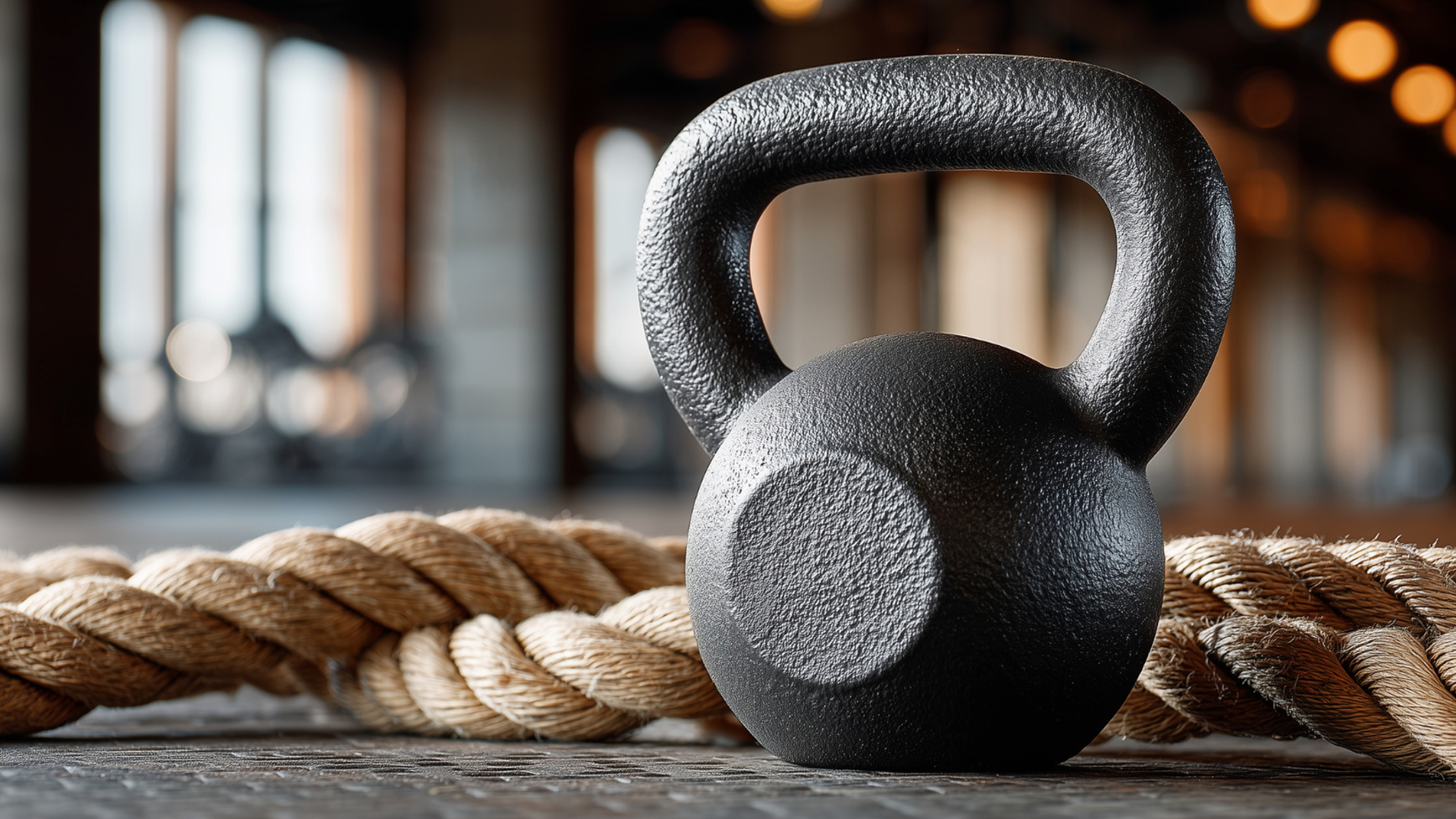
If you have access to basic equipment or a home gym, you can add these movements into your MetCon routine for more intensity without increasing the length of your workout. Use light to moderate weight so you can keep your pace steady.
Kettlebell Swings
Hold the kettlebell with both hands in front of your body. Hinge at the hips and swing the weight forward to chest height using the drive from your legs and hips, then let it swing back between your legs. This movement builds power through the hips while keeping your heart rate elevated throughout.
Dumbbell Thrusters
Hold dumbbells at shoulder height and lower into a squat. As you stand up, press the weights overhead in one smooth motion, then lower them back to your shoulders. Legs, arms, and shoulders all work together, making this a high-effort, full-body movement.
Battle Ropes
Hold one end of the rope in each hand with knees slightly bent. Create steady waves by lifting and slamming the ropes up and down in an alternating rhythm. Upper body, shoulders, and arms fatigue quickly while breathing and heart rate climb fast.
Box Jumps
Stand facing a sturdy box or platform. Bend at the knees and jump up onto it, landing softly with both feet before stepping back down. Lower-body power improves quickly when performed with control and steady pacing.
Equipment adds variety and challenge, but body-weight training alone is enough to make metabolic conditioning effective.
Common Mistakes That Stall Progress in MetCon
Even short sessions can derail progress when the fundamentals are ignored.
Skipping the warm-up is a common misstep. Cold muscles and joints increase the risk of injury. Letting form collapse under fatigue is another. Speed should never come at the expense of control.
Overtraining is also an issue. Three to four sessions per week is plenty for most people. Recovery matters.
Poor fueling can also limit performance. Training on an empty stomach and skipping hydration often leads to early fatigue.
Using In-Home Personal Training to Stay Consistent With MetCon
Short, intense workouts only work when they are performed correctly and consistently. This is where in-home personal training often makes the biggest difference in conditioning training.
When a trainer comes to your home, the workout fits into your day without extra travel or setup. Sessions can be designed around your actual space and energy levels rather than a generic template.
With metabolic conditioning, especially, real-time pacing matters. A trainer can adjust intervals, spot form breakdown under fatigue, and scale movements safely. This keeps intensity productive instead of overwhelming.
At Svetness, clients often use in-home training to learn how MetCon should feel before continuing some sessions on their own. That blend of guidance and independence helps protect both safety and consistency.
Bottom Line: What You Really Get From Consistent Metabolic Conditioning
Metabolic conditioning workouts offer busy people a realistic way to train without sacrificing effectiveness. Short sessions build strength, elevate heart rate, and improve endurance simultaneously.
What most people notice first is better energy and improved stamina in daily tasks. Over time, those changes compound into stronger movement, more reliable fitness habits, and greater confidence in what their body can handle.
You do not need an hour. You do not need perfect conditions. You need focused effort and a routine you can return to week after week. And for many, pairing MetCon with in-home guidance through Svetness makes that consistency far easier to maintain.
Ready to receive proper guidance for your fitness goals?
> Book Your Free Svetness Consultation
FAQs
How often should I do metabolic conditioning workouts each week?
Most people do well with two to four sessions per week, depending on overall training volume and recovery. Spacing sessions with lighter activity days helps protect joints and energy levels.
Can beginners safely start with metabolic conditioning workouts?
Yes, when intensity is scaled appropriately. Beginners should use body-weight movements, slower pacing, and longer rest periods to build a safe foundation.
Are metabolic conditioning workouts effective for fat loss?
They can support fat loss by increasing calorie burn and improving overall activity levels. Nutrition and daily movement still play a major role in long-term results.
Is in-home personal training good for metabolic conditioning programs?
In-home training works well for MetCon because it allows real-time feedback, pacing control, and customization within the client’s own space, which supports both safety and consistency.
Start your Svetness journey today
Get a free consultation and see how our trainers can transform your wellness journey.