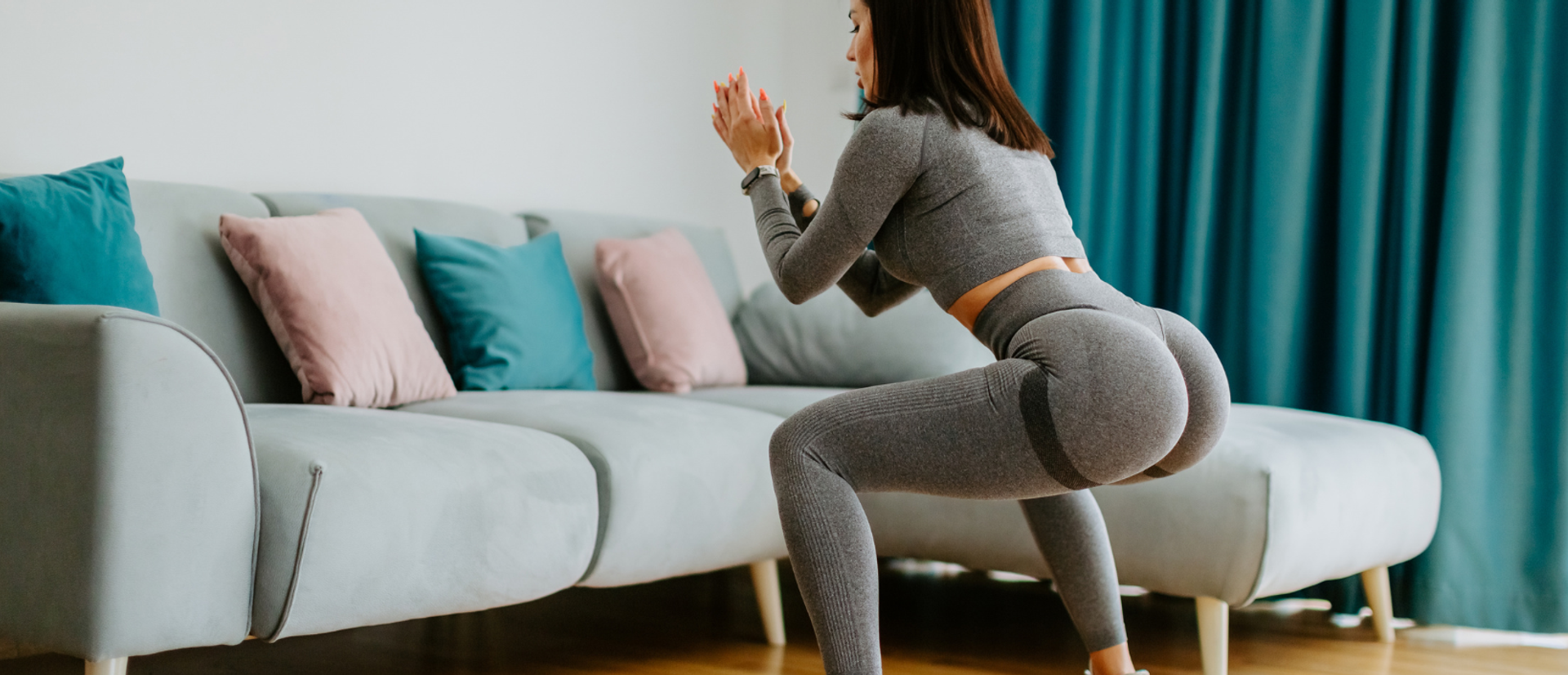
Best Glute Exercises for Women To Do At Home
Learn the best glute exercises for women to do at home to build strength, improve posture, and shape your lower body with simple, effective workouts.
For many women, building strong glutes is not just about appearance. It is about how your body feels when you walk up stairs without strain, stand for long periods without lower back discomfort, and move through your day with confidence and stability.
Your glutes drive nearly every lower-body movement you make. When they are weak or inactive, other areas of the body are forced to compensate, often leading to pain, imbalance, or stalled progress.
The good news is that you do not need a gym membership or bulky machines to build strong, lifted glutes. With the right approach, the best glute exercises for women can be done entirely at home using your own bodyweight, simple resistance bands, and focused technique. What matters most is how you move, not where you train.
This guide breaks down exactly how to activate your glutes, what exercises actually work, how to structure your workouts at home, and how to progress safely for long-term results.
Glute Training: It’s for Everyone
Your glutes are the largest muscle group in your body. They consist of three primary muscles that work together to create strength, movement, and joint support.
The gluteus maximus is responsible for hip extension and gives the glutes their main shape and power. The gluteus medius stabilizes your hips and controls side-to-side movement. The gluteus minimus assists with rotation and alignment of the pelvis and legs.
When these muscles are weak or underused, the body shifts stress into the lower back, knees, and hips. That is why many women experience knee pain, tight hip flexors, and low-back fatigue even if they do not feel overtly injured. The glutes simply are not doing their fair share of the work.
Strong glutes support:
- Better posture and spinal alignment
- Reduced knee and lower back pain
- Stronger walking, running, and lifting mechanics
- Improved balance and coordination
- More efficient calorie burn during daily movement
Training your glutes consistently changes how your entire lower body functions. It is not only about building shape. It is about restoring strength where your body needs it most.
How to Train Glutes at Home Effectively
Many women work hard in their workouts, but never quite feel their glutes working. This usually comes down to how the muscles are activated and loaded.
Effective glute training at home relies on three principles.
First, you must activate the glutes before heavy or compound movements. Long hours of sitting decrease natural glute firing, which makes it harder for the muscles to engage when you train. Light activation before your main workout wakes the muscles up.
Second, you must train the glutes through multiple angles. Bridges, lunges, lateral movements, and hip hinges all target the glutes in different ways. Relying on only one movement pattern limits results.
Third, you must progressively increase the challenge. That can mean adding reps, slowing the tempo, holding longer pauses, or increasing resistance. Without progression, the muscles have no reason to adapt.
The best glute exercises for women work because they follow these three rules, even when done with minimal equipment.
The 10 Best Glute Exercises for Women To Do At Home
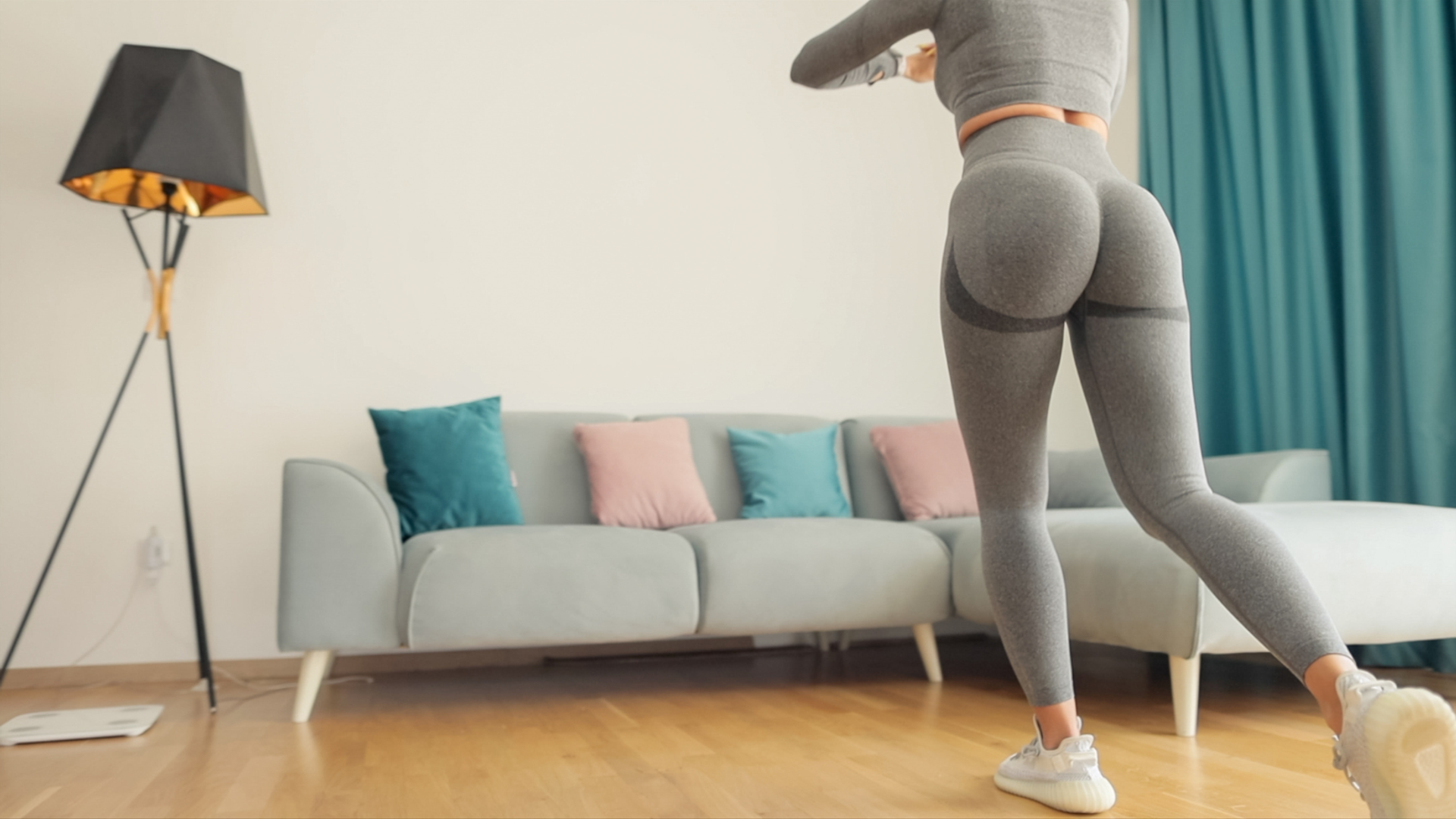
These movements can be done with nothing more than a mat and, optionally, a resistance band or dumbbells. Place your hands and feet deliberately, move slowly, and focus on squeezing the glutes on every rep.
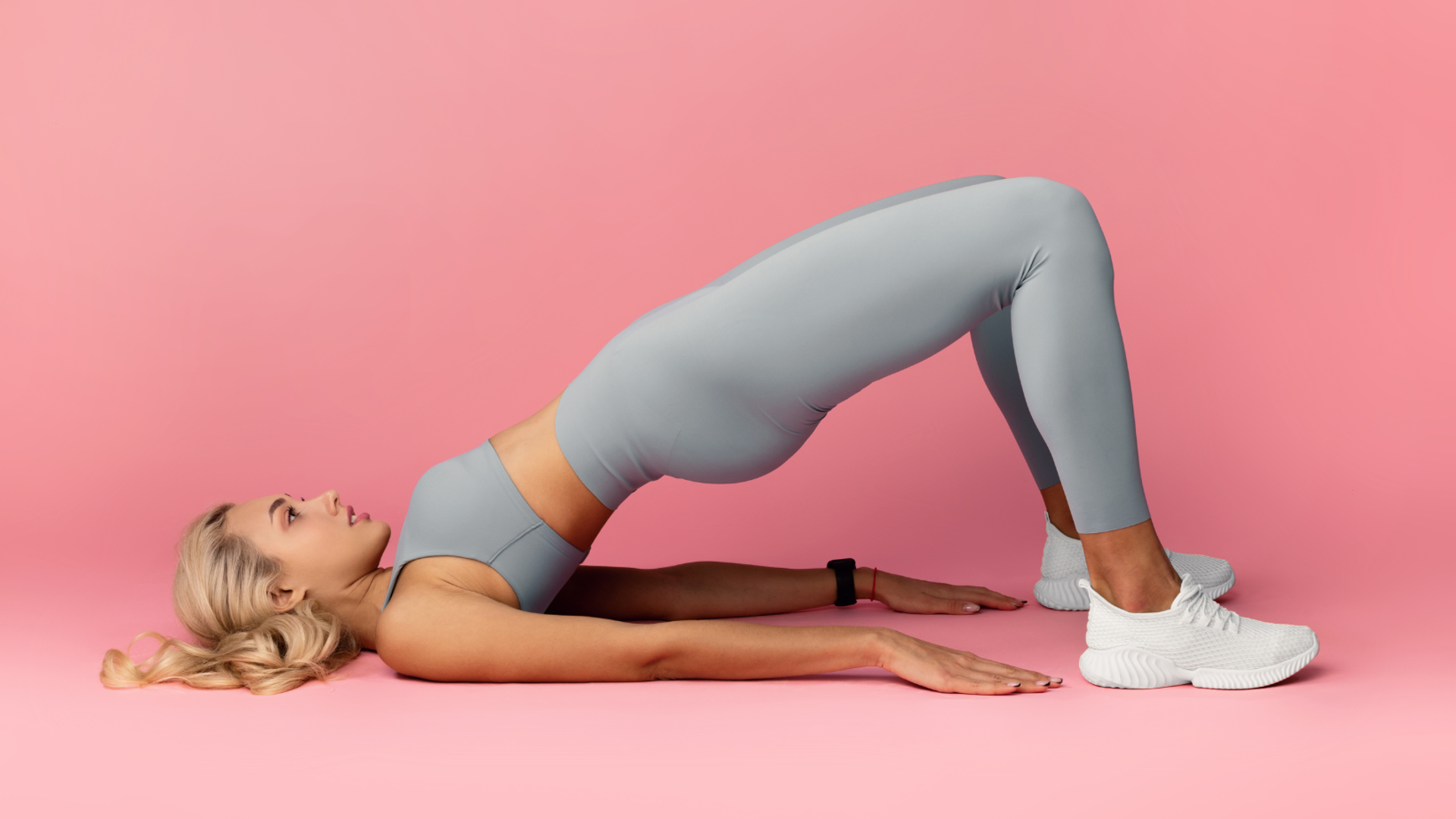
1. Glute Bridges
Lie on your back with your knees bent and feet flat on the floor, hip-width apart. Place your arms at your sides. Press through your heels and lift your hips until your body forms a straight line from shoulders to knees. Squeeze your glutes at the top, pause briefly, then lower with control.
Glute bridges retrain your hips to extend properly and are ideal for rebuilding strength after long periods of sitting.
2. Banded Glute Kickbacks
Loop a resistance band around your thighs or ankles. Come onto your hands and knees with your core braced. Keeping your knee bent, drive one heel back toward the ceiling until your glute fully contracts. Lower slowly and repeat before switching sides.
This exercise isolates the glutes and is excellent for activation at the beginning of a workout.
3. Donkey Kicks
Start on all fours with your hands under your shoulders and knees under your hips. Lift one leg with the knee bent and drive your heel upward without arching your back. Keep your hips square and your core tight. Lower slowly and repeat.
Donkey kicks reinforce clean hip extension and build endurance through the glutes.
4. Banded Side Steps
Place a resistance band just above your knees. Bend your knees slightly and sit back into your hips. Step laterally while keeping tension on the band at all times. Take several steps in one direction, then switch.
This movement targets the gluteus medius, which is crucial for hip stability and injury prevention.
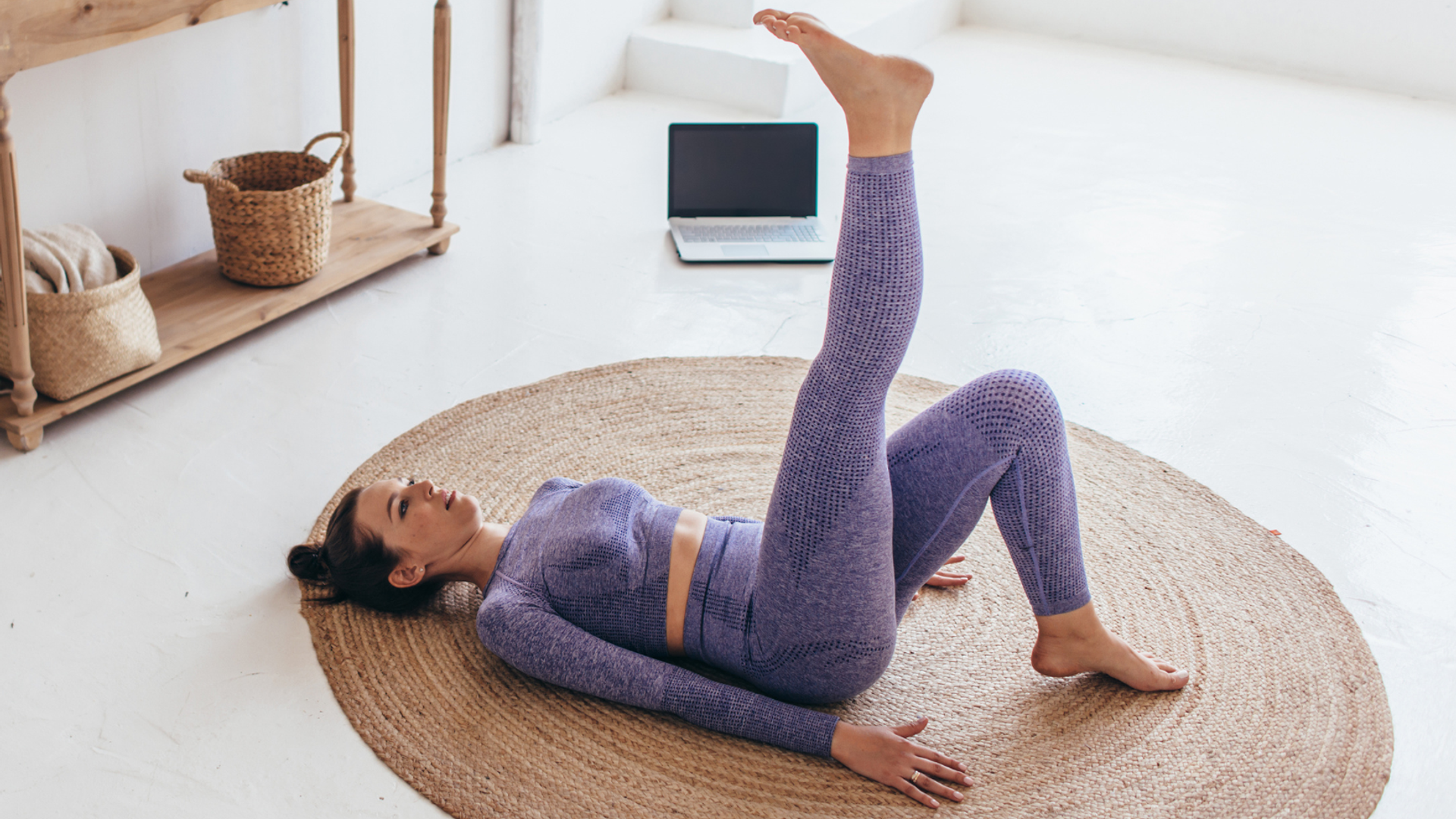
5. Single-Leg Glute Bridges
Lie on your back with one knee bent and one leg extended. Press through the heel of the bent leg to lift your hips. Lower slowly with control. Complete all reps on one side before switching.
Single-leg bridges expose strength imbalances and increase the demand on each glute individually.
6. Bulgarian Split Squats
Stand a few feet in front of a chair or bench. Place one foot behind you on the seat. Lower your back knee toward the floor while keeping your chest upright. Drive through your front heel to return to standing.
This move builds strength, balance, and visible shape in the glutes and thighs.
7. Step-Ups
Stand in front of a sturdy step or box. Place one foot fully on the surface. Drive through the heel to stand up tall. Lower with control and switch legs.
Step-ups mimic real-world movement and build functional glute strength that carries into daily life.
8. Squats and Variations
Stand with feet shoulder-width apart. Sit your hips back and bend your knees as though lowering into a chair. Drive through your heels to stand tall and squeeze your glutes at the top.
Try sumo squats with a wider stance or tempo squats with a slower lowering phase to increase glute activation.
9. Hip Thrusts
Sit on the floor with your upper back against a couch or bench. Place your feet flat and set a dumbbell or band across your hips. Drive through your heels and lift your hips upward while keeping your ribs down. Pause at the top, then lower slowly.
Hip thrusts build glute thickness and strength more aggressively than bridges.
10. Curtsy Lunges
Stand tall with feet hip-width apart. Step your right leg diagonally behind your left and lower into a lunge. Press through the front heel to return to standing and switch sides.
Curtsy lunges target the outer glutes and thighs while improving hip control.
Start your Svetness journey today
Get a free consultation and see how our trainers can transform your wellness journey.
Sample At-Home Glute Workout Plan
This routine balances strength, stability, and volume for effective home training.
Warm-Up (5 minutes):Hip circlesBodyweight squatsGlute bridgesBanded side steps
Main Set (3 rounds):Banded glute kickbacks – 15 reps each sideBulgarian split squats – 12 reps each legHip thrusts – 15 repsStep-ups – 12 reps per sideCurtsy lunges – 12 reps per side
Cool Down (5 minutes):Figure-four stretchHamstring stretchSeated hip stretch
Train this circuit three times per week with at least one rest day between sessions.
Common Glute Training Mistakes That Stall Progress
Many women work hard yet struggle to see results because one or two habits subtly undermine their progress.
Skipping activation before heavy movements causes the quads and lower back to dominate the work. Always wake your glutes up first.
Rushing reps reduces time under tension. Slow, controlled movement is far more effective for shaping than fast, sloppy reps.
Letting the knees collapse inward during squats and lunges places stress on the joints and reduces glute engagement. Focus on driving your knees slightly outward.
Training too often without rest leads to fatigue instead of growth. The glutes need recovery to rebuild stronger.
How Often Should You Train Glutes for Noticeable Results?
Glute training works best when it fits into your week in a sustainable way. Many women either under-train and stall progress or over-train and end up sore, fatigued, and frustrated.
The right frequency allows the muscles to grow while still giving them time to recover and strengthen.
Adjust to Your Fitness Level
For most women, two to three focused glute days per week is the sweet spot. This gives your muscles repeated stimulus without overwhelming your joints or nervous system. If you are new to strength training or returning after a break, two sessions per week are usually enough to rebuild activation and coordination.
More experienced women often benefit from three sessions, especially if each workout varies slightly in intensity or exercise selection.
Remember to Rest
Rest days matter just as much as training days. Glutes are large, powerful muscles that need time to rebuild after being challenged. Training them hard every day may feel productive in the moment, but it often leads to stalled progress, tight hips, and lower back discomfort. Growth happens during recovery, not during the workout itself.
A Quick Sample Routine
A simple weekly structure that works well for home training looks like this:
Day 1: Focused glute and lower-body strengthDay 2: Upper body or light cardioDay 3: Rest or gentle mobilityDay 4: Glute-focused workout with different variationsDay 5: Full-body or low-impact conditioningDay 6: Optional third glute session or long walkDay 7: Full rest
This kind of rhythm allows your glutes to be trained often enough to change, without being overworked. It also fits more naturally into real life, which is what keeps women consistent over the long term.
If you feel constant soreness, joint irritation, or fatigue that lingers for days, your body is asking for more recovery. If you feel no challenge at all between sessions, slightly increasing volume, resistance, or tempo is usually the answer.
How to Progress Without Equipment
Progress does not require heavier weights at home. You can make bodyweight training more effective by slowing your tempo, adding pauses at the top of movements, increasing total volume, or performing unilateral work such as single-leg exercises.
These methods increase muscle tension safely and are ideal for women training in a limited space.
Using In-Home Personal Training to Strengthen and Shape Glutes
Many women struggle with glute training because they feel unsure whether they are activating the right muscles. At-home personal training removes that uncertainty.
With Svetness, your specialist personal trainer observes your movement in real time and corrects foot placement, hip angle, and posture so each exercise actually targets the glutes instead of the lower back or quads.
Your plan evolves based on your strength, recovery, and daily schedule. On weeks when energy is lower, volume can be adjusted without losing momentum. When strength increases, resistance and complexity progress naturally.
This personalized approach is especially valuable for glute training, where subtle technique differences dramatically affect results.
Nutrition and Recovery for Glute Growth
The best glute exercises for women only work when supported by proper recovery and nutrition.
Protein supports muscle repair and firmness after training. Carbohydrates fuel your workouts and prevent fatigue. Healthy fats support hormone balance and joint health. Hydration allows muscles to contract efficiently and recover properly. Sleep is where actual tissue repair occurs.
And remember: skipping recovery slows progress more than most people realize.
Bottom Line: The Key to Growing Your Glutes
Strong, lifted glutes are the result of consistent training, not luck or quick fixes. When you combine intentional movement, proper form, smart progression, and adequate recovery, your lower body becomes stronger, more stable, and visibly shaped over time.
The best glute exercises for women work because they train the body the way it naturally moves. You do not need a gym. You need a repeatable routine that fits your real life.
If you want structured guidance without leaving home, in-home personal training provides accountability, progression, and expert coaching tailored to your body and schedule.
Ready to build stronger glutes with expert guidance?
FAQs
How long does it take to grow stronger glutes at home?
Most women notice improved muscle engagement and endurance within three to four weeks. Visible shape changes often appear within six to eight weeks with consistent training and supportive nutrition.
Can bodyweight glute exercises really build muscle?
Yes. Muscle growth depends on tension and progression, not equipment. By slowing tempo, increasing volume, and using single-leg variations, bodyweight training can support significant glute development.
How many days per week should women train their glutes?
Two to three dedicated glute sessions per week are effective for most women. Rest days between sessions allow muscle tissue to recover and rebuild.
Do glute exercises help with lower back pain?
They often do. Strong glutes reduce strain on the lower back by improving pelvic stability and distributing load more evenly during movement.
Start your Svetness journey today
Get a free consultation and see how our trainers can transform your wellness journey.