Introducing Weighted Hula Hoops, and How to Use Them

Discover how weighted hula hoops build core strength, cardio fitness, and full-body balance. Learn how Svetness trainers incorporate hoops into fitness plans.
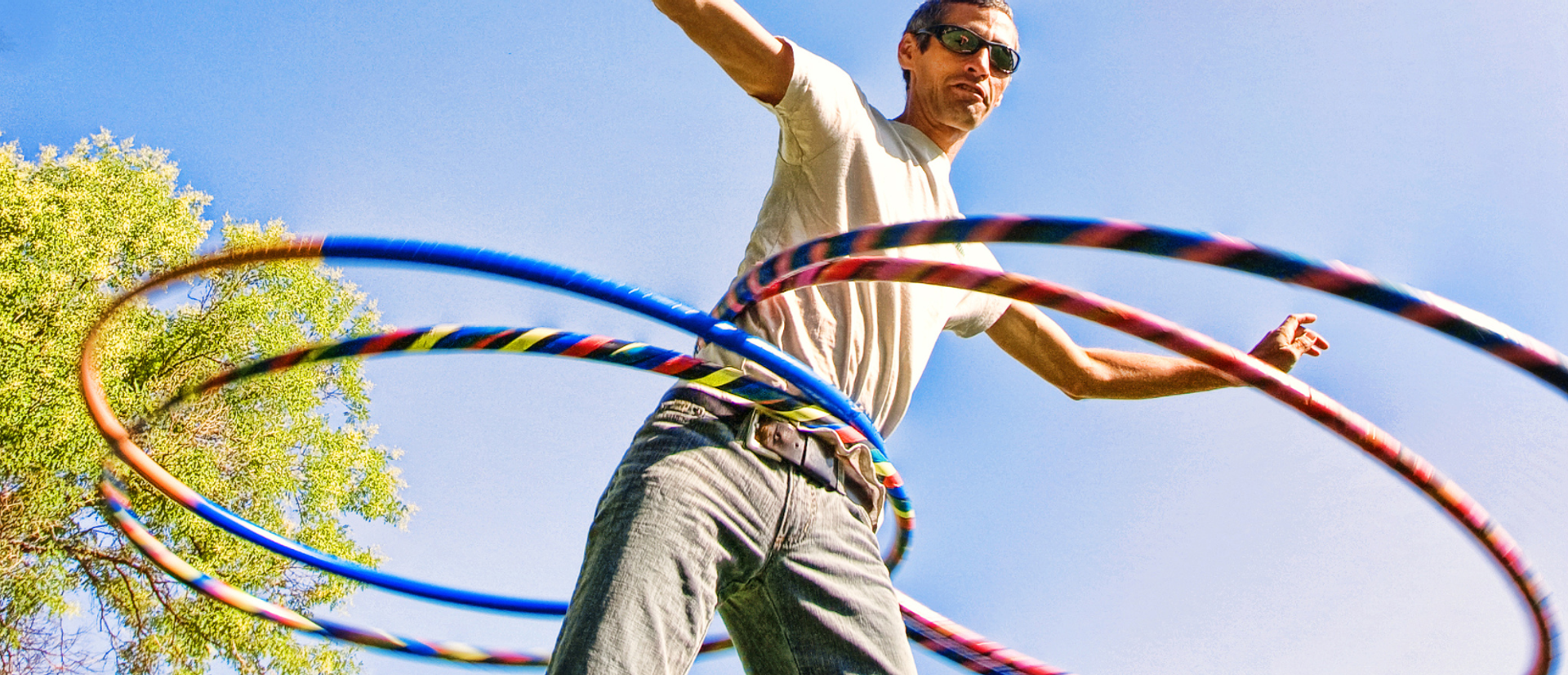
Weighted hula hoops aren’t exactly new, but they’ve picked up serious momentum over the past few years, and not just on social media.
They’re popping up in living rooms, garages, and apartment workouts across the country. And for good reason. They’re compact, surprisingly challenging, and a lot more engaging than your average ab circuit.
People are drawn in by the novelty at first. A flashback to childhood days of hooping in the garden, maybe. But once they actually start using one, they notice something else: it works.
In just one simple motion (spinning a heavy hoop around your waist), you engage your core,
get your heart rate up, and force yourself to focus. It’s low-impact, rhythm-based, and oddly meditative. You find your groove, and before you know it, you’re sweating.
Still, there’s a learning curve. The extra weight changes everything. You can’t just swing your hips like you did with a plastic toy hoop. There’s control involved. Posture matters. And if you do it right, you’ll feel it, not just in your abs, but through your back, glutes, and hips too.
Interested in learning more about this simple yet effective exercise tool? You’ll find all the info you need (and more) below.
Let’s get hooping!
What Makes a Weighted Hula Hoop Different?
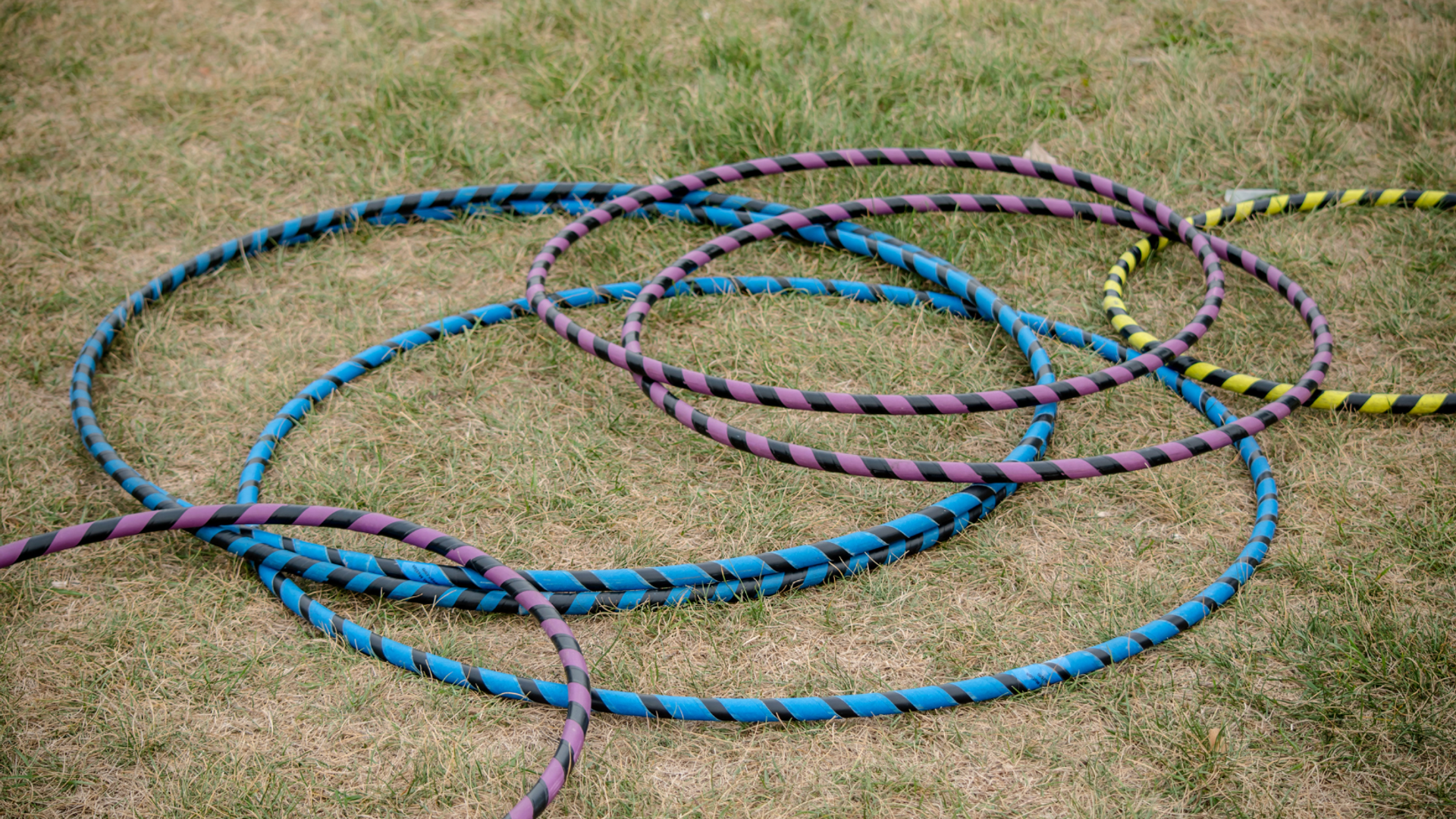
Weighted hula hoops might look like oversized versions of the ones we used as kids, but they move very differently.
First of all, the extra weight slows things down, forcing your muscles to work harder with each pass. But it's not just about the weight. It's about how that weight interacts with your body. How it pulls against your momentum, challenges your control, and changes your posture without you even realizing it.
You’ll also notice pretty quickly that your usual rhythm doesn’t cut it anymore. The hoop doesn’t spin effortlessly. It pushes back. That means your core, hips, and glutes have to stay engaged the entire time, even during rest phases. It’s not something you can fake.
Resistance and Control
Most weighted hoops range from 1 to 3 pounds, though some go heavier. That added resistance turns the movement into more than just cardio. It’s light strength training, too. Your muscles don’t just stabilize; they steer. The hoop requires active engagement, especially in the obliques and lower back.
These characteristics make weighted hula hooping a surprisingly effective way to build muscular endurance. It's not explosive, but it’s persistent. Your body has to coordinate its movements to maintain the rhythm, which is a workout in itself.
Different Hoop Styles
Not all hoops are the same. Some are padded and soft, designed for comfort. Others are segmented or adjustable, allowing you to change the size or weight as needed. Beginners tend to benefit from wider, lighter hoops to master the motion. More experienced users might use smaller, denser hoops for a greater challenge.
Finding what suits you takes a bit of trial and error. But once you do, it makes all the difference.
How Weighted Hula Hoops Actually Help Your Body

At first glance, they might look like a gimmick. But the truth is, weighted hula hoops have real body shaping and fitness potential, especially when used consistently. They improve coordination, strengthen the core, and offer a surprisingly effective cardiovascular workout without high impact or equipment.
There’s also a mental benefit. Hooping requires presence. You have to pay attention to your form, rhythm, and breathing. That kind of focused movement, where you're fully immersed, not thinking about reps or time, can be surprisingly refreshing.
Core Strength and Rotation
Hooping works your entire trunk. Your abs, yes, but also your obliques, spinal stabilizers, and even the muscles around your hips and glutes. Most ab workouts are linear, typically involving exercises such as planks, sit-ups, and leg raises. But hooping adds a rotational element, which trains the body in a way that mimics real-life movements.
You're not isolating muscles. Instead, you’re coordinating them. That’s what makes hooping so valuable. You’re teaching your body to stabilize and move fluidly simultaneously, which improves posture and helps prevent injuries.
Low-Impact Cardio That Doesn’t Feel Like a Workout
There’s something sneaky about the cardio you get from hooping. You’re moving, your heart rate’s climbing, you’re breaking a sweat, and yet, it doesn’t feel like drudgery. That’s part of the appeal.
For people who hate treadmills or find jogging too hard on the knees, hooping is a solid alternative. It’s rhythmic, controlled, and doesn’t require pounding the pavement. And because it’s enjoyable, people actually do it. That consistency is where the magic happens.
Balance and Body Awareness
Keeping a hoop going takes coordination. Your feet, hips, spine, and core all have to move in sync. That improves proprioception, which is your sense of where your body is in relation to its surroundings.
Over time, it helps you become more balanced, stable, and in control of your movements.
That carries over into strength training, sports, and even how you walk. It’s a subtle shift, but a powerful one.
Endurance and Weight Management
Hooping for 10 or 15 minutes might not seem like much. Until you try it, that is.
It’s a continuous effort. As your endurance improves, you can extend your sessions, add intervals, or combine them with strength circuits for a full-body workout.
In terms of weight management, it burns calories like any moderate cardio workout, somewhere around 200–400 per hour, depending on intensity. More importantly, it builds momentum. It’s something you can stick with.
It’s Actually Fun!
Fun matters more than people think. The best workout is the one you’ll do consistently because you enjoy it, and weighted hooping offers that. It’s actually very similar to a dance workout. There’s music, movement, and a built-in rhythm that makes the time fly. You’re not watching the clock. Instead, you’re just moving.
And if you laugh or mess up along the way? Even better. A healthy dose of playfulness keeps fitness from becoming a chore.
How Svetness Personal Trainers Use Weighted Hoops

Svetness personal trainers aren’t bound to one style of training; they focus on what works. And in the right hands, a weighted hula hoop is a smart, flexible tool that can be adapted to nearly any session. It’s low-cost, space-friendly, and surprisingly effective for core activation, coordination, and light conditioning.
For beginners, trainers might use hooping as a warm-up—just a few minutes to engage the core and shake off stiffness. For more advanced clients, it might show up mid-session as active recovery between strength sets.
Adding Variety to Core Work
Hoops give trainers an alternative to planks and crunches. They offer continuous tension, movement, and body awareness, which are great for people who get bored easily or struggle with static exercises. And because they require form and control, they also teach you to brace your core without holding your breath.
Building Custom Home Routines
In-home training means making the most of what you’ve got.
A weighted hoop doesn’t take up much room, and it’s easy to integrate into living room circuits, hallway movement flows, or backyard workouts. Trainers might pair hooping with bodyweight strength exercises, balance drills, or mobility work.
At the end of the day, hooping is more adaptable than other forms of exercise. That’s why it works so well during at-home workouts.
How to Incorporate Weighted Hula Hoops Into Your Routine

If you’re new to fitness, or just looking for something fresh, weighted hula hoops offer an easy on-ramp.
Why? Because you don’t need a detailed plan or a strict schedule to start seeing results. What matters most is how often you use it and how you structure your sessions. A few focused minutes here and there can add up fast, especially if you’re strategic.
The key is not treating hooping like a gimmick. Think of it like any other piece of fitness equipment. You wouldn’t swing a dumbbell around without purpose. The same goes for the hoop. Add it to your week with a bit of intention, and it becomes a low-impact way to build muscle, engage your core, and introduce some rhythm into your workouts.
Core Activation Warm-Up (5–10 Minutes)
Start your session with a controlled hoop warm-up. It helps loosen the hips, activate your midsection, and mentally shift you into “workout mode.”
Stand tall with feet shoulder-width apart, engage your abs, and begin hooping slowly. Focus on posture. Breathe evenly. Keep your hands at your sides or raised for an added challenge.
Try doing two rounds of 3–5 minutes with a short rest between. This gets the blood flowing and switches on those stabilizers before you move into strength or cardio work.
Hoop Intervals for Cardio (15–20 Minutes)
If you’re using the hoop as a standalone workout, intervals work well. Alternate between steady hooping and short bursts of faster spinning or different stances.
For example:
- 2 minutes regular pace
- 30 seconds fast spins
- 30 seconds squat stance hooping
- 1-minute recovery
- Repeat 3–4 times
You can build on this structure over time, adding new variations or extending the work intervals. Add music with a clear beat to stay in rhythm; it helps more than you’d think.
Strength Circuit Finisher (5–10 Minutes)
Hoops aren’t just for the warm-up. They make a great finisher, especially after a core or full-body session. You’re already fatigued, so hooping forces you to keep engaging your trunk while moving.
Set a timer for 5–10 minutes. Alternate between hooping and a few quick bodyweight moves like:
- 30 seconds hooping
- 10 push-ups
- 30 seconds hooping
- 15 squats
- 30 seconds hooping
- 20 mountain climbers
Repeat as many rounds as you like. It’s a light, sweaty end to your workout that hits the core again without crushing your joints.
Active Recovery or Rest Days
Don’t want to do a full workout? Grab the hoop for a low-pressure movement session. It’s perfect for recovery days. Hooping gets your blood moving, loosens the hips, and gives you a break from structured reps and sets.
Even 10–15 minutes in front of the TV or listening to a podcast can help keep your body engaged without taxing your nervous system. Think of it like a moving meditation: low stakes, high payoff.
Weekly Planning Ideas
There’s no one “correct” way to schedule hooping, but here’s a simple example that mixes it in throughout the week:
- Monday: Strength training + hoop warm-up
- Tuesday: 15-minute hoop interval workout
- Wednesday: Rest or recovery hoop session
- Thursday: Bodyweight workout + hoop finisher
- Friday: Long hoop session (20–30 mins)
- Saturday: Rest
- Sunday: Optional movement or hoop fun with music
The goal isn’t perfection here. It’s repetition. Use it to stay loose, boost energy, and break up routine. Some days, it’ll be your main workout. Other days, it's just a reset. Both count.
Final Thoughts

Weighted hula hoops aren’t just a passing trend. They’re a smart, sustainable way to build core strength, boost endurance, and reconnect with your body. They’re accessible, low-impact, and, most importantly, fun.
If you’re looking for something that feels different, that keeps you moving without dragging you down, this is worth a try. Start slow. Stay consistent. And let it be what it is: a tool that adds energy and variety to your routine, not another “must-do.”
With the right guidance from an experienced at-home personal trainer, like the ones at Svetness, a simple hoop can become part of something much bigger: a routine you actually enjoy.
Ready to give structured in-home personal training a go?
> Book a Free Svetness Consultation
FAQs
Can I lose weight with a weighted hula hoop?
Yes, but consistency matters more than intensity. Weighted hooping burns calories and builds muscle tone, especially in the core. When combined with a balanced fitness plan and a healthy diet, it can support sustainable weight loss.
How long should I use a weighted hula hoop each day?
Start small. Aim for 5 to 10 minutes. As your body adapts, you can gradually build up to 20–30 minutes of exercise a few times a week. It depends on your goals and fitness level. Short, regular sessions tend to work best.
Are weighted hula hoops safe for everyone?
Generally, yes. But if you have lower back issues, injuries, or balance concerns, it’s worth checking with a trainer or healthcare provider first. Always start with a lighter hoop and focus on form to avoid strain.
What size or weight should I choose?
Beginners typically do best with a hoop that is around 1–2 pounds and has a diameter that reaches roughly waist height. That gives you control without too much strain. Once you’ve got the motion down, you can adjust for more challenges.
Start your Svetness journey today
Get a free consultation and see how our trainers can transform your wellness journey.