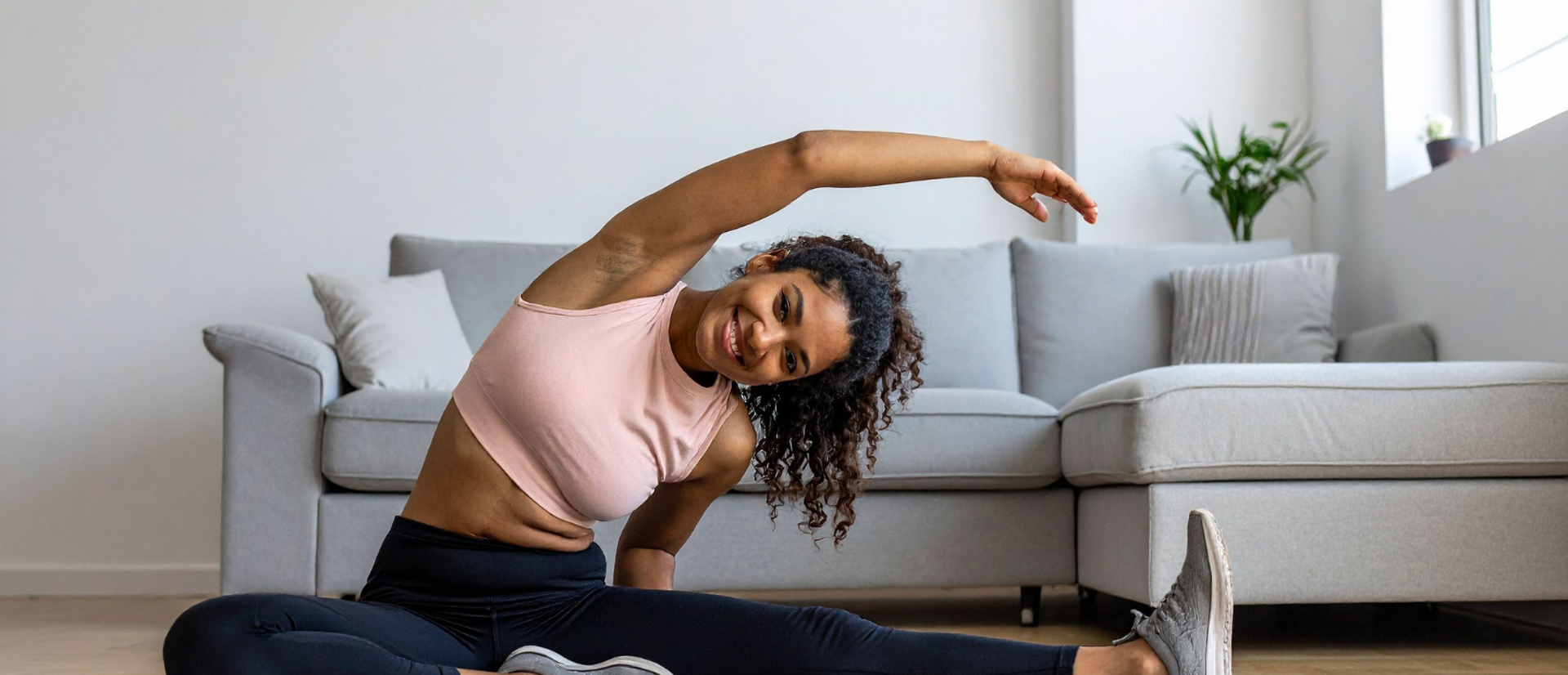
At Home Workouts (No Equipment): 30 Moves + 3 Routines

At-home workouts with no equipment can feel tougher than a gym session. Here are 30 moves and 3 routines for small-space training.
Getting into a fitness routine often feels tougher than tackling the workout itself. The gym demands time. Memberships drain money. Equipment occupies space. A busy schedule makes even a short drive across town feel daunting, especially after working, caring for children, running errands, or spending a long day on your feet.
That is why bodyweight training offers a practical place to start. You build strength, elevate your heart rate, and boost mobility in a small space. You need only a clear plan. You do not rely on machines or a full home gym to move with purpose.
At Svetness, we often guide clients who believe they need better conditions before pursuing fitness seriously. One client, Tom, juggled three children and a demanding job. He lived in a small apartment and insisted that a real workout required a gym. His trainer designed short, focused bodyweight sessions tailored to his living room, schedule, and starting level. Within weeks, Tom gained strength, boosted his energy, and began to trust the process. These results aren’t out of the ordinary - many of our clients are saying the same thing.
The right approach to at-home workouts, no equipment, can make home training feel structured instead of random. This blog gives you 30 bodyweight moves, 3 routines, and a smarter way to progress.
Start your Svetness journey today
Get a free consultation and see how our trainers can transform your wellness journey.
How At-Home Workouts No Equipment Can Build Strength
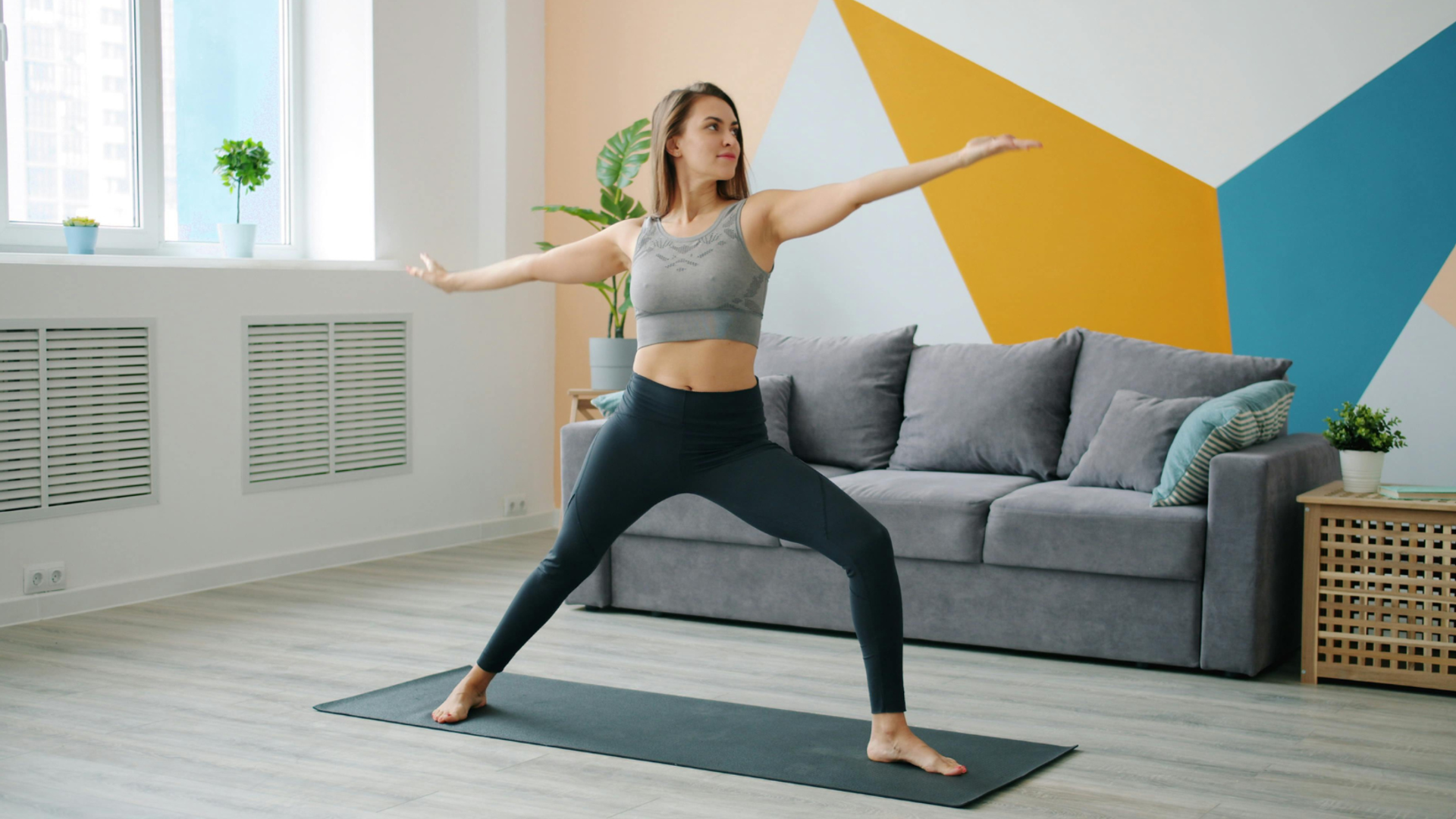
Bodyweight training uses your own body as resistance. A squat trains your legs and glutes. A push-up works your chest, shoulders, arms, and core. A plank teaches your body to stay stable. A mountain climber raises your heart rate and challenges coordination.
Simple does not mean easy. Adjust the same movement for different fitness levels. Start with wall push-ups and glute bridges as a beginner. As you progress, master decline push-ups, jump squats, slower tempo work, or shorter rest periods.
The key is structure. Random movement keeps you active. Planned routines build your body more evenly. A useful home workout targets lower-body strength, works the upper body, engages your back, challenges your core, and boosts cardio.
Prioritize good form over speed. Rush each rep, and you risk neglecting the muscles you intend to train. Practice controlled movement to build strength with less strain. Experience sharp pain, joint discomfort, dizziness, or numbness? Stop and select a gentler option.
A good plan for at-home workouts with no equipment should feel challenging but repeatable. You should finish feeling like you worked, not like you punished yourself.
Setting Up Your Home Workout Space
Use enough space to lie down, step forward, and move your arms freely. Choose a living room, bedroom, patio, garage, or hallway. Clear hazards that could trip you. Ensure the floor offers traction. Keep water within reach.
Warm up briefly to prepare your body. March in place, roll your shoulders, circle your arms, perform slow squats, and hinge at the hips. Spend three to five minutes getting ready.
Match your pace to your current fitness level. Accelerate too soon, and you risk sloppy reps and early fatigue. Start with control. Build the workout as your body warms up.
Wear shoes to grip hard or slick floors. Train barefoot for slow strength movements if the surface is safe. Choose the option that provides the most stability.
30 Bodyweight Exercises You Can Use at Home
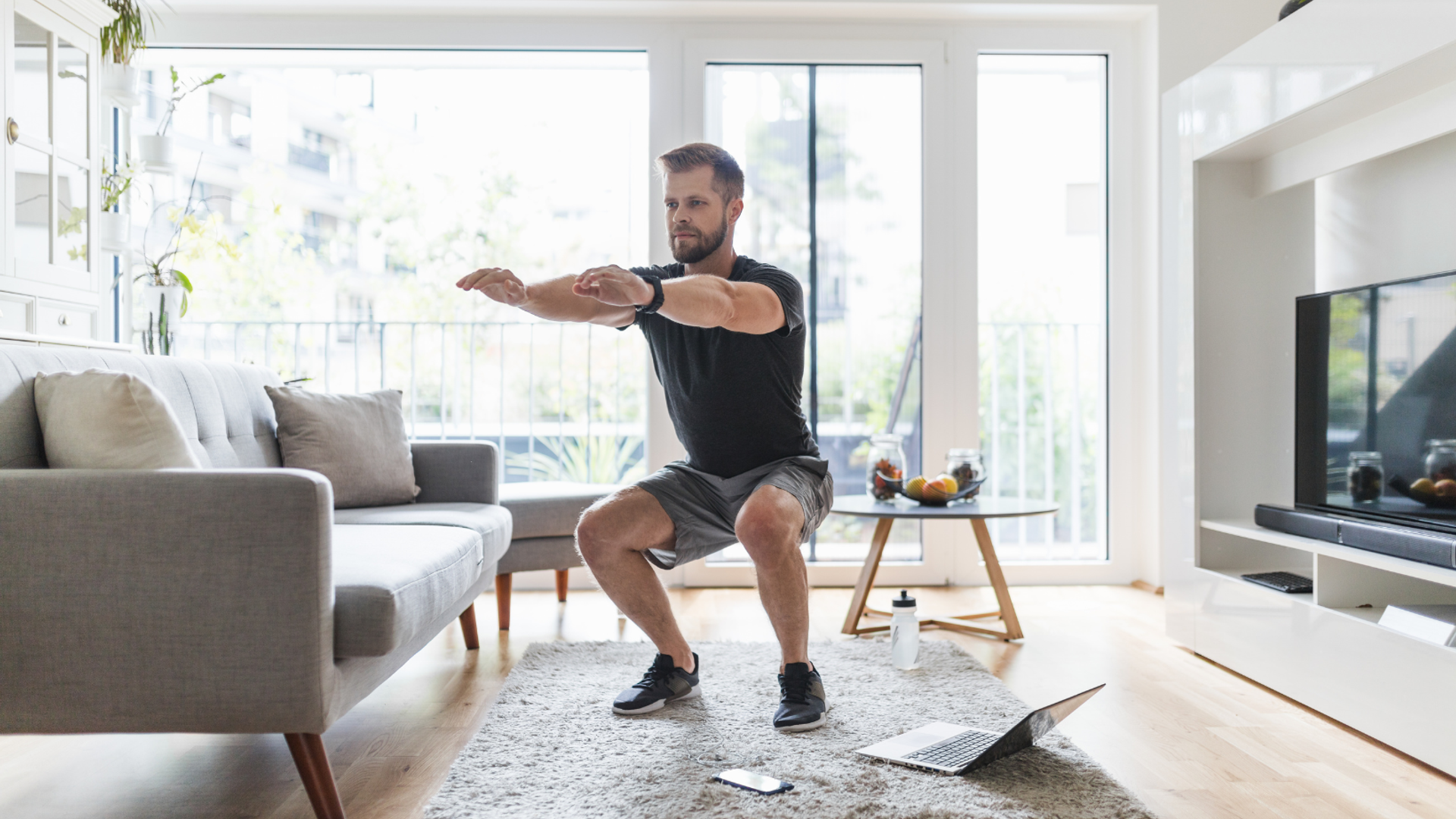
Choose movements that match your ability, and avoid any setup that feels unstable. You can pick an area to focus on like no equipment arm workouts, or work out the whole body. You do not need all 30 exercises in one session. A strong workout may use 6 to 10 movements.
- Squats: Train your quads, glutes, and hamstrings by sitting your hips back and standing tall.
- Reverse lunges: Step backward, lower with control, and return to standing.
- Forward lunges: Step forward, bend both knees, then press back to the start.
- Bulgarian split squats: Place one foot behind you on a stable surface and lower through the front leg.
- Glute bridges: Lie on your back, press through your heels, and lift your hips.
- Single-leg glute bridges: Lift with one leg while the other stays extended.
- Calf raises: Rise onto the balls of your feet, pause, and lower slowly.
- Step-ups: Use a stable step or stair and stand tall through the working leg.
- Wall sits: Lean against a wall and hold a seated position.
- Jump squats: Squat, jump, and land softly with bent knees.
- Push-ups: Lower your chest toward the floor and press back up.
- Incline push-ups: Place your hands on a stable raised surface to reduce difficulty.
- Wall push-ups: Press away from a wall for a gentler upper-body option.
- Wide push-ups: Place your hands wider to place more focus on the chest.
- Diamond push-ups: Bring your hands close together to challenge the triceps.
- Decline push-ups: Raise your feet to make the push-up harder.
- Pike push-ups: Lift your hips and lower your head toward the floor to work the shoulders.
- Tricep dips: Use a stable chair and bend your elbows with control.
- Prone arm raises: Lie face down and lift your arms slightly to train the upper back.
- Superman holds: Lift your arms and legs, pause, then lower slowly.
- Towel rows: Use only a safe setup that can support your weight.
- Inverted rows: Use a sturdy table only if it is stable and secure.
- Planks: Hold your body in a straight line with your core engaged.
- Side planks: Support your body on one forearm and the side of your foot.
- Dead bugs: Extend the opposite arm and leg while keeping your lower back steady.
- Bird dogs: Extend the opposite arm and leg from hands and knees.
- Bicycle crunches: Rotate with control as one elbow moves toward the opposite knee.
- High knees: Run in place, lifting your knees to hip height.
- Mountain climbers: Start in a plank and drive your knees toward your chest.
- Burpees: Move through a squat, plank, optional push-up, and jump or step-up finish.
This list provides a robust library of no-equipment at-home workouts. The next step is putting those movements into a routine that matches your level.
Start your Svetness journey today
Get a free consultation and see how our trainers can transform your wellness journey.
Beginner Routine for Building Confidence
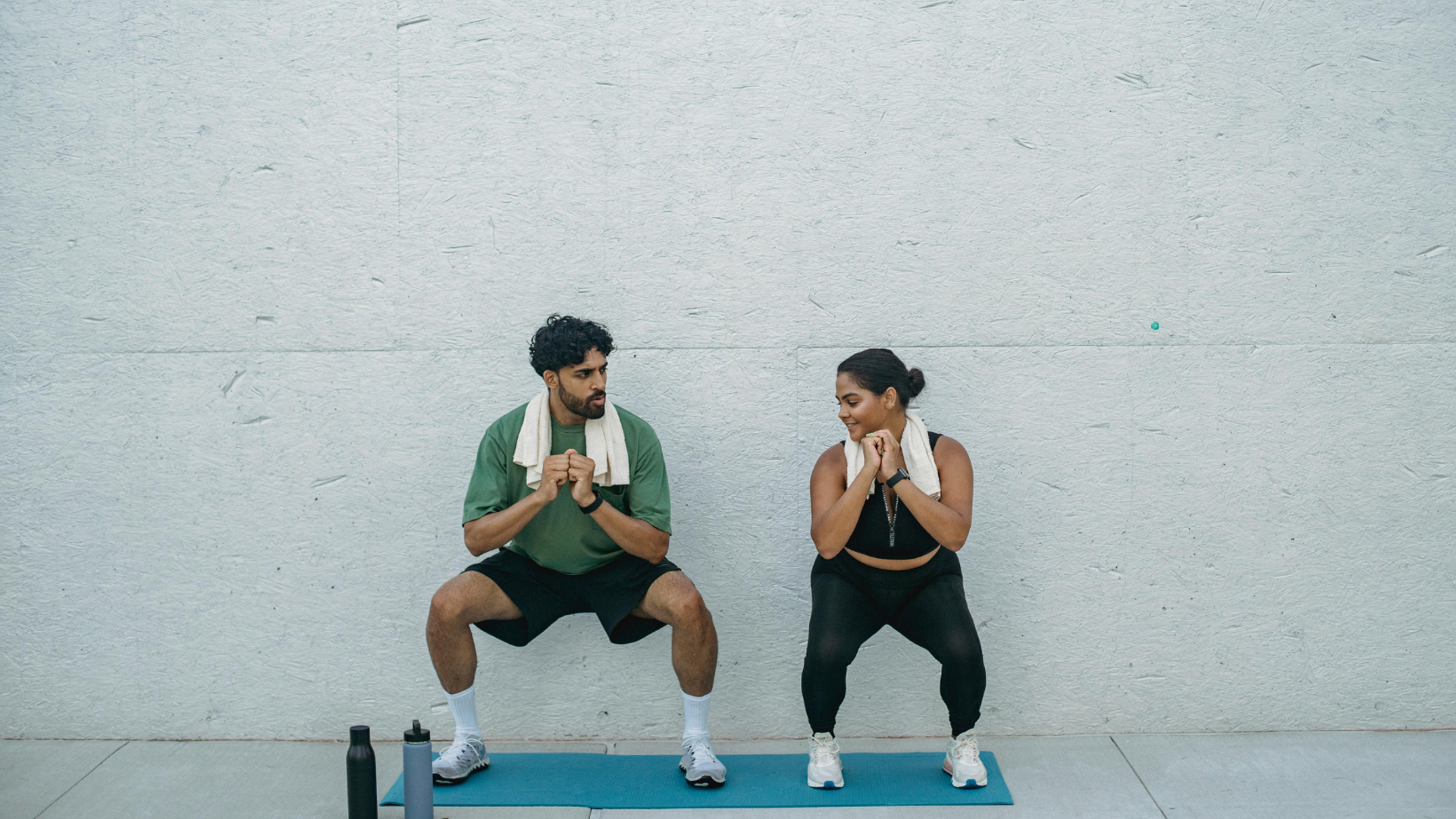
This routine works well if you are new to exercise, coming back after time away, or building trust in your body. Start with 3 to 5 minutes of light movement, then move through the workout at a steady pace.
Perform bodyweight squats for 40 seconds. Rest for 20 seconds. Move through incline push-ups, glute bridges, wall push-ups, reverse lunges, dead bugs, plank holds, and high knees. Finish 2 rounds if you are new to training. Push to 3 rounds if you feel strong and your form stays steady.
Rest for 60 to 90 seconds between rounds. Use that time to breathe and reset. If your wrists, knees, or lower back feel uncomfortable, change the exercise. For example, use wall push-ups instead of incline push-ups. You can also reduce the range of motion in your lunges.
This beginner routine works because it covers the full body without too much impact. You train your legs, upper body, core, and cardio in one manageable session.
Intermediate Routine for a Stronger Challenge
This routine suits people who already exercise sometimes and want a more demanding session. It uses shorter rest periods and movements that require more control.
Start with a warm-up. Next, execute jump squats for 45 seconds. Take a 15-second rest. Move on to push-ups, reverse lunges, perform diamond push-ups, complete Bulgarian split squats, raise arms in a prone position, hold side planks, cycle crunches, and do mountain climbers. Repeat for 3 rounds.
The shorter rest periods make the session feel more intense. Keep your form clean, even as you get tired. If jump squats feel too hard on your knees, switch to regular squats. If push-ups become messy, move to incline push-ups.
This routine builds muscular endurance and stamina. It also helps you practice staying controlled when your heart rate rises.
Advanced Routine for a Higher-Effort Session
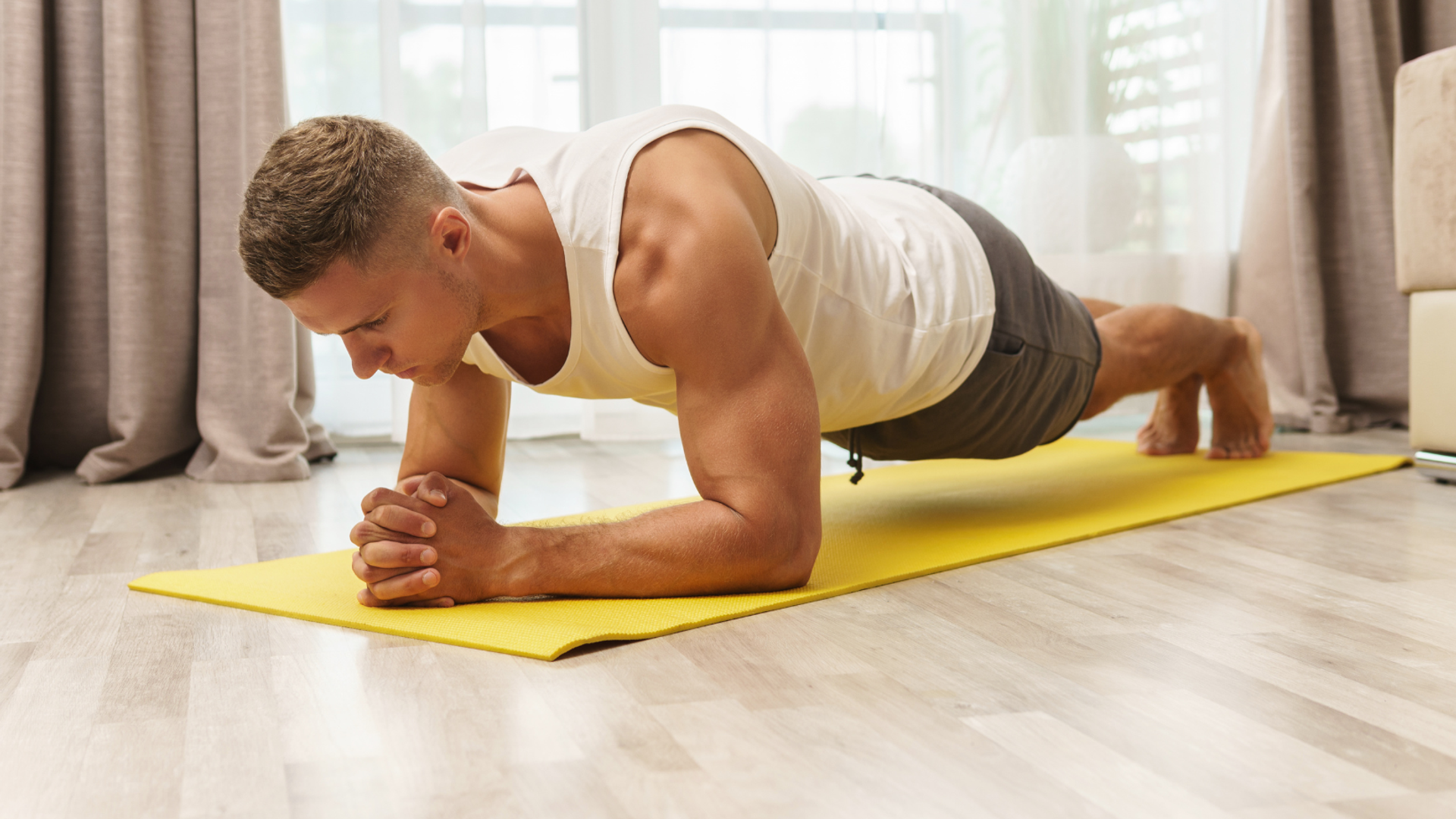
This routine is best for people who already have a solid fitness base. It includes harder variations and less rest, so form matters.
Warm up by performing slow squats, rotating hips, swinging arms, and lunging easily. Execute decline push-ups for 50 seconds. Rest for 10 seconds. Proceed with raising hips in single-leg glute bridges, pressing up in pike push-ups, jumping in lunges, dipping for triceps, holding Superman poses, walking out planks, burpeeing with an optional push-up, climbing quickly in mountain climbers, and sitting against the wall.
Complete 3 rounds. Add a fourth round only if your form stays strong.
Advanced training should still feel controlled. Land softly during jumps. Keep your core tight during burpees and planks. Stop if you feel sharp pain, dizziness, or joint discomfort. Hard training should challenge you, not leave you hurt.
How to Progress Without Equipment
Progress is one of the biggest reasons people stall with home workouts. Doing the same session for months can cause your body to adapt, slowing results.
Boost the difficulty of bodyweight workouts by adding more reps, another round, or shortening rest periods. Slow down each rep, pause in the hardest part, or progress to a tougher variation.
A wall push-up can be performed as an incline push-up. An incline push-up can be performed as a floor push-up. A floor push-up can become a decline push-up. The same idea works for squats, lunges, glute bridges, and planks.
Leverage tempo to build challenge. Lower into a squat for three seconds, pause for one, then stand. This simple shift can make a familiar exercise more demanding.
Track your workouts, so you know what you did last time. Progress becomes easier to manage when you can see your reps, rounds, and rest periods.
Mistakes That Can Make Home Workouts Less Effective
Rushing is a common issue. Fast reps may feel harder, but they can reduce control. Slow, steady reps often create better muscle engagement and safer movement.
Skipping the warm-up can make squats, lunges, and push-ups feel stiff. A few minutes of movement helps your body prepare for training.
Choosing exercises that are too advanced can also hold you back. A beginner does not need burpees, jump lunges, and decline push-ups on day one. Starting at the right level builds momentum and confidence.
Many home routines also miss back training. Push-ups and planks are common, but your upper back needs attention, too. Superman holds, prone arm raises, towel rows, and safe inverted rows can help create a more balanced session.
Recovery matters as well. Sleep, protein, hydration, and rest days all affect how your body responds to training.
How Svetness Helps You Train Better at Home
A list of exercises can be helpful, but at-home personal training can turn those exercises into a plan that fits your body and goals. Svetness brings coaching to your home, apartment gym, outdoor space, or another location that works for you.
Your trainer can watch your form, adjust exercises, manage intensity, and keep your workouts progressing. This support can be valuable if you have old injuries, feel unsure about exercise, or struggle to stay consistent.
A trainer can also help you make better use of the time you have. Instead of guessing which exercises to do, you get a session built around your current level. Instead of repeating the same routine for months, you get progress that matches your strength and confidence.
Home training can remove many barriers. There is no commute, no crowded equipment area, and no need to plan around gym hours. With the right support, your home can become a place where fitness feels realistic.
Make Your Home the Place Where Fitness Sticks
A gym can be useful, but it is not the only place where progress happens. Your home can give you a flexible way to train without waiting for more time or a perfect routine. We can point you towards the basic equipment for a home gym, but you can see progress without it.
Start with exercises that match your level. Focus on form. Build gradually. Give your body time to recover. Over time, small sessions can become a routine that feels steady and sustainable.
If you want support building a home workout plan that fits your goals, contact Svetness today to get paired with a personal trainer.
> Book Your Free Svetness Consultation
FAQs
How often should I do no-equipment workouts at home?
Most people do well with 3 to 4 sessions per week. Beginners may start with 2 to 3 sessions and build gradually. Rest days help your muscles recover and adapt.
Can I build muscle without weights?
Yes. Bodyweight training can build muscle, especially for beginners and intermediate exercisers. Progress comes from harder variations, more reps, slower tempo, and better control.
How long should an at-home workout last?
A useful workout can take 20 to 50 minutes. Beginners may start with shorter sessions. More experienced exercisers may need longer workouts or harder variations.
What should I do if an exercise hurts?
Stop the movement and choose an easier option. Muscle fatigue is normal, but sharp pain, joint pain, dizziness, or numbness is a signal to pause.
Are no-equipment workouts good for weight loss?
They can support weight loss when paired with consistent movement, balanced nutrition, sleep, and realistic habits. Strength exercises help maintain muscle, and cardio movements can increase calorie burn.
Start your Svetness journey today
Get a free consultation and see how our trainers can transform your wellness journey.