10 Best At-Home Leg Workouts

Looking to build strong legs at home? Discover 10 expert-approved leg workouts you can do without a gym + tips on form, equipment, and progression.
You’ve probably heard all the jokes about “not skipping leg day”. However, the benefits of leg workouts aren’t just limited to growing impressive quads. They also improve stability, balance, and endurance.
Regular leg exercises strengthen your hips and knees, laying the foundation for nearly every functional movement you do. If you’ve ever felt unsteady during a hike, struggled to get up from the floor, or noticed your knees aching after long days on your feet, leg strength might be the missing link.
Below, you’ll find the best at-home leg workouts designed to build strength, support healthy movement, and improve performance over time. Each one is accessible, beginner-friendly, and easy to scale as you get stronger.
After this comprehensive guide, you’ll never have an excuse (or even desire) to skip leg day ever again!
Why Train Legs at Home?

Many people skip leg day, especially when working out at home. It’s not always as appealing as upper body training, and the soreness can linger longer. But consistent lower-body work pays off across nearly every area of your life.
Your legs are your base, and they need regular attention.
Strong Legs Improve Mobility and Stability
When your lower body is strong, everything else becomes easier. Climbing stairs, walking long distances, and standing for extended periods all require muscular endurance in your legs. Training consistently helps you move more efficiently and with less fatigue.
Lower Body Training Supports Full-Body Strength
Many compound leg exercises also challenge your core and upper body. Squats, lunges, and step-ups require coordination, posture, and stability through the entire chain. That crossover benefit helps you build strength beyond just your legs.
Good For Preventing Injury
Neglecting the lower body can create imbalances, especially if you’re focused only on upper body or cardio work. Over time, weak glutes or tight hamstrings can lead to back pain, knee issues, or poor posture.
Regularly training your legs improves muscle symmetry and encourages better movement habits. That can mean fewer aches, better flexibility, and stronger support around vulnerable joints.
How to Train Legs Effectively at Home?

Before jumping into movements, it’s worth understanding how to get the most out of each session. Training your legs at home can be simple, but that doesn’t mean it’s easy. Proper form, progression, and pacing make a big difference in results.
Focus on Full Range of Motion
Partial reps might feel easier, but they limit how much the muscles are challenged. Use a range that allows you to feel the stretch and contraction in every repetition, regardless of whether you’re squatting, lunging, or hinging.
Don’t Rush Through Sets
Speed doesn’t equal strength. Quick reps often rely on momentum instead of muscle control. Take your time. Three to four seconds on the way down, and a strong but controlled push to the top can make even bodyweight exercises feel challenging.
This approach not only makes workouts more effective but also protects your joints and reinforces better movement patterns.
Use What You Have
No dumbbells? Use water jugs or backpacks. No step or bench? Try your stairs or a sturdy box. Leg workouts at home don’t require perfect gear. They just require a bit of creativity and a willingness to push yourself.
You can also add resistance bands for extra tension or increase reps to build endurance. As long as the movement is challenging and controlled, you’ll see results.
Prioritise Form Over Load
It’s tempting to add weight quickly, but poor form cancels out the benefit. Focus on alignment first: keep your knees tracking over your toes, maintain a flat back, and move your hips evenly. Once that’s locked in, then consider increasing resistance.
Many people make the mistake of progressing too fast and end up with discomfort or limited results. In-home personal trainers often start by slowing things down, then gradually build intensity to achieve better long-term outcomes.
The 10 Best At-Home Leg Workouts
Each of these exercises targets a different part of the lower body and can be adjusted based on your fitness level. Start with bodyweight versions if you’re new, then add resistance as you progress.
Below you can find the top ten muscle-building workouts used by Svetness trainers to develop strong, sturdy legs.
1. Bodyweight Squats

A staple for a reason. Squats target your quads, glutes, hamstrings, and core all at once. They mimic everyday movements, such as sitting and standing, making them incredibly functional.
Begin with your feet about shoulder-width apart, toes slightly turned out. Lower your body by bending at the hips and knees, keeping your chest tall and back flat. Aim to lower yourself until your thighs are parallel to the ground, then press through your heels to stand back up.
Three sets of 12–15 reps is a solid start. Focus on keeping your knees aligned and ensuring your heels stay in contact with the ground. Slowing the movement and adding a pause at the bottom can increase intensity without the need for weights.
Once you're confident with form, hold dumbbells at your sides or in a goblet position to increase resistance. You can also add pulses or tempo variations to challenge your control and endurance.
2. Walking Lunges
Lunges challenge your balance, coordination, and strength. They target the quads, glutes, and hamstrings, and also encourage better ankle and knee control.
Start by standing tall with feet together. Step forward with one leg, lowering your back knee toward the floor until both knees are bent at about 90 degrees. Push through your front foot to bring the back leg forward into the next lunge.
Keep your torso upright and avoid letting your front knee cave inward. You can start with ten lunges per leg and build from there. Holding light dumbbells by your sides will add a significant amount of challenge once you’ve mastered the form.
3. Glute Bridges
Perfect for activating the glutes and improving hip extension. Glute bridges are a simple yet effective exercise, especially helpful for individuals who spend long periods sitting.
Lie on your back with knees bent, feet flat on the ground, and arms by your sides. Press through your heels to lift your hips until your body forms a straight line from shoulders to knees. Pause at the top, squeeze your glutes, then lower slowly.
Start with three sets of 15–20 reps. For added difficulty, try single-leg variations or place a weight across your hips for an extra challenge. You can also elevate your feet or shoulders to increase range and demand.
4. Bulgarian Split Squats
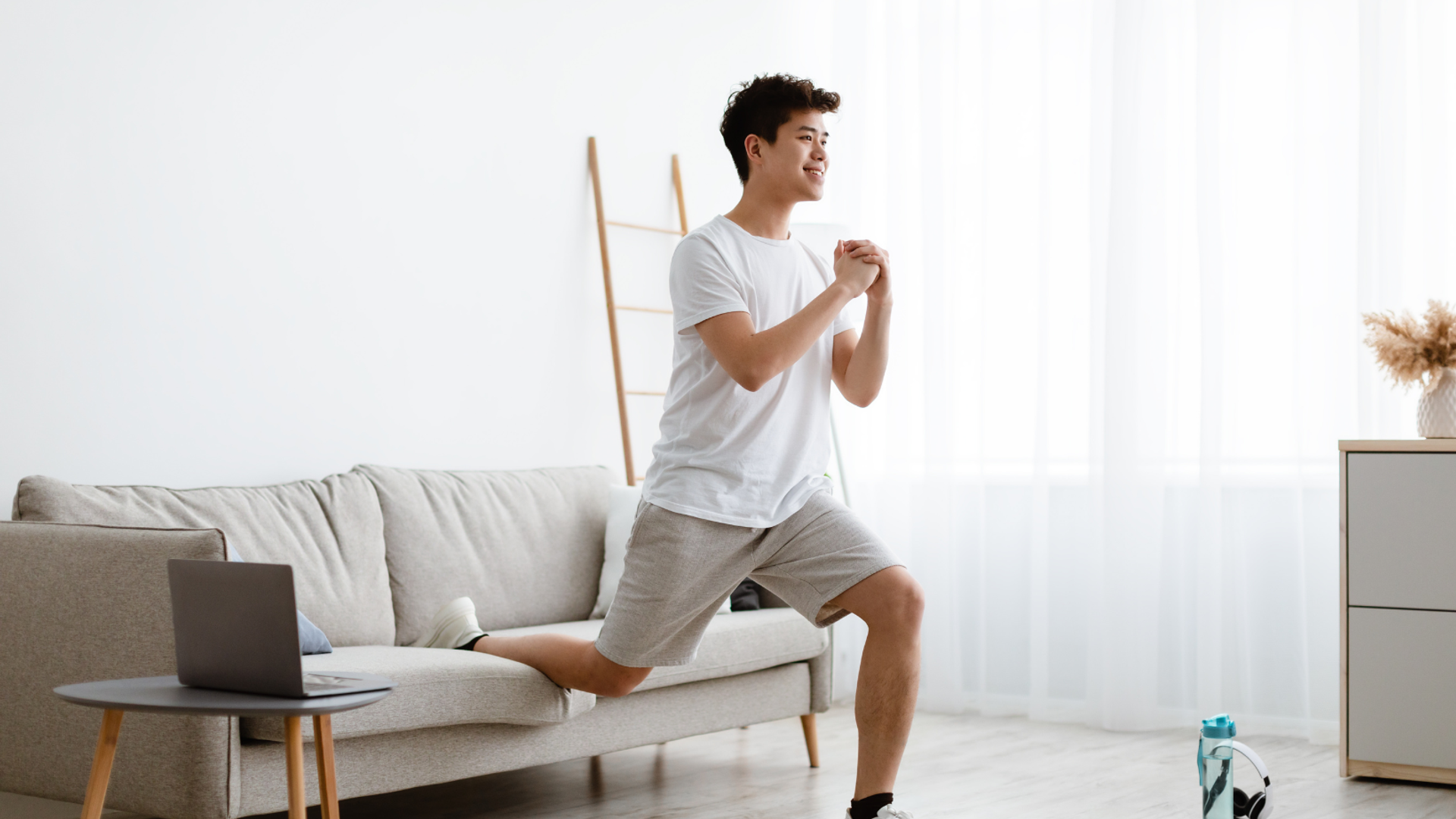
This one’s a little tougher, but well worth the effort. Bulgarian split squats challenge your balance and target the quads, glutes, and stabilising muscles. They also help identify strength imbalances between sides.
Stand facing away from a bench, chair, or couch. Rest one foot on the surface behind you and lower your body into a lunge, keeping your front knee aligned and your torso tall. Press through your front foot to return to standing.
Do 8–10 reps per leg to start, and don’t worry if your balance feels shaky at first. It’s part of the process. Holding dumbbells at your sides increases the challenge, but form comes first.
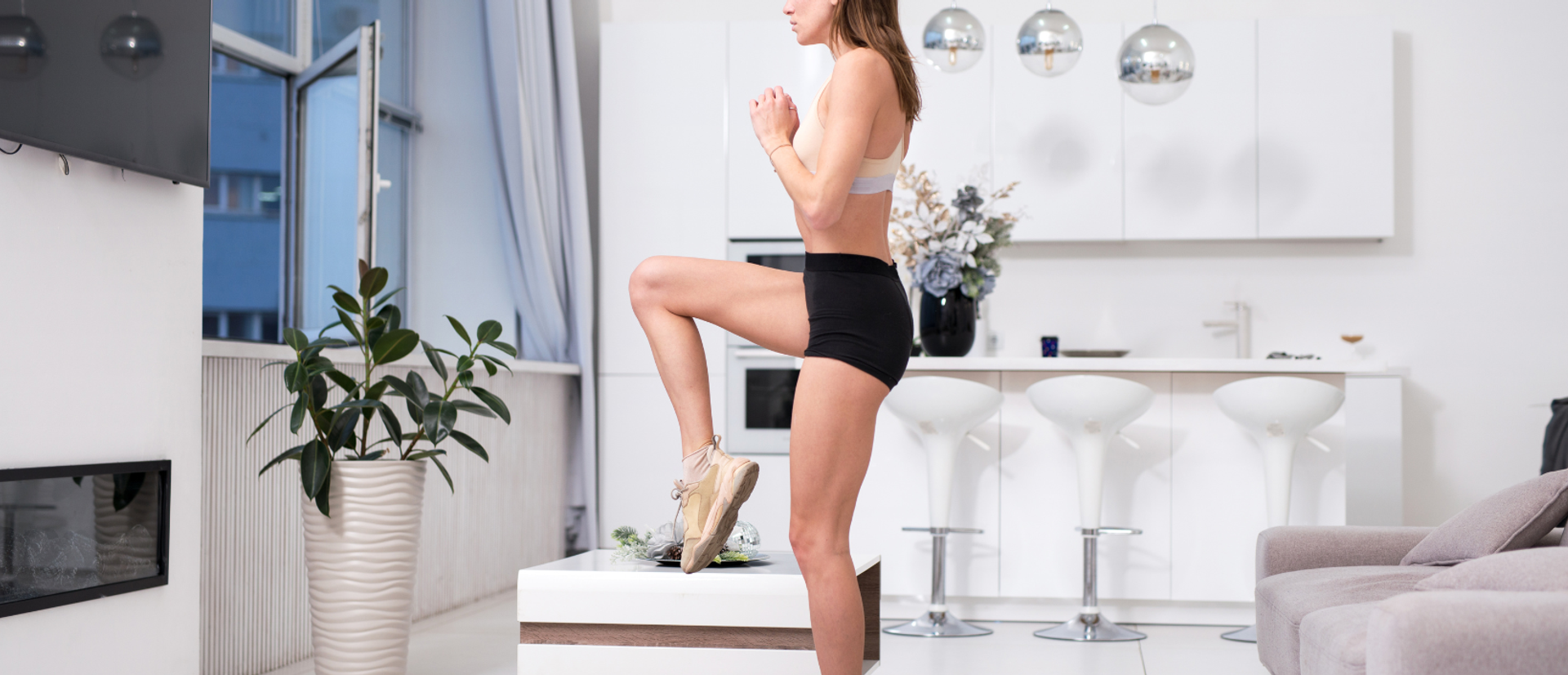
5. Step-Ups
If you have stairs or a stable platform, step-ups are a fantastic addition to your leg routine.
They train unilateral strength, improve coordination, and mimic everyday movements like climbing or hiking.
Start with one foot on the step. Drive through your heel to lift your body up, bringing your other foot to meet it at the top. Step down with control and repeat on the same leg before switching to the other side.
Begin with 10–12 reps per leg. Adding dumbbells increases resistance, and raising the step height adds more range. Make sure the platform is stable and that your entire foot is firmly planted during each step.
6. Calf Raises
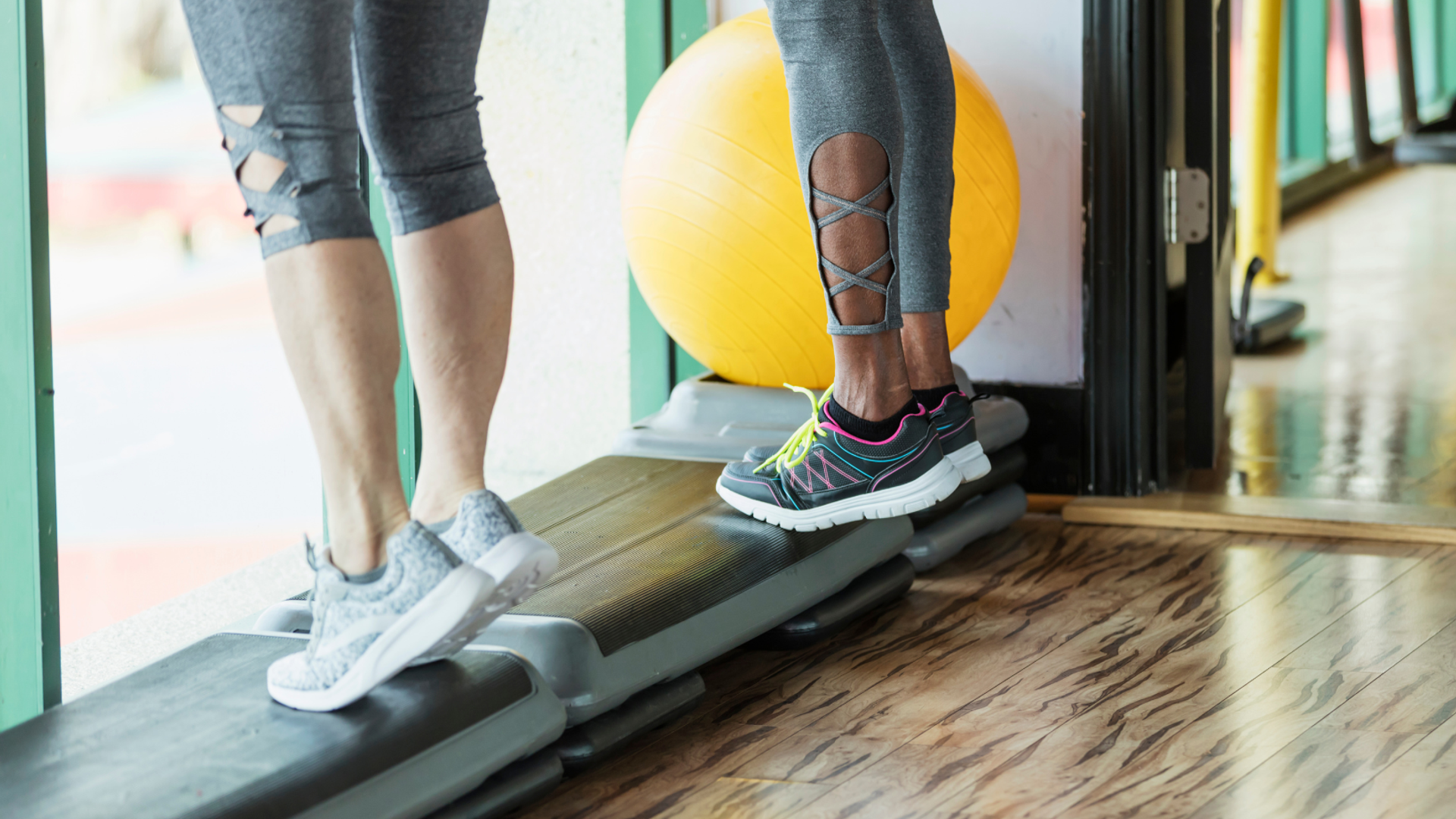
Calves are often overlooked, but they play a crucial role in stability, balance, and ankle strength. Calf raises are straightforward and can be done just about anywhere.
Stand tall with feet hip-width apart. Push through the balls of your feet to lift your heels as high as possible, pause at the top, then lower slowly. For best results, control the tempo and avoid bouncing.
Aim for three sets of 15–20 reps. You can increase difficulty by holding dumbbells or performing the movement on a step to add a deeper stretch at the bottom. Single-leg variations are great for isolating each side and building better control.
7. Wall Sits
This isometric exercise builds endurance in the quads, glutes, and calves while also testing your mental grit. It’s simple but intense, and ideal when space is limited.
Stand with your back against a wall, then slide down until your thighs are parallel to the ground, with your knees stacked over your ankles. Hold this position as long as you can while keeping your core tight and shoulders relaxed.
Start with 30–45 seconds and gradually increase over time. To add variety, hold weights in your lap or alternate heel raises during the hold to engage the calves.
8. Reverse Lunges
These take pressure off the knees compared to forward lunges and are easier to control, especially for beginners. They target the same muscles (quads, glutes, and hamstrings) while placing less demand on balance.
Step one leg back and lower into a lunge, keeping your front knee aligned and your chest tall. Press through your front heel to return to a standing position. Alternate sides or complete all reps on one side before switching to the other.
Try three sets of 10–12 reps per leg. Adding dumbbells increases the load, but it’s best to start with bodyweight to build confidence in the movement.
9. Hip Thrusts

Similar to glute bridges, but with a larger range of motion and more glute activation. Hip thrusts require a bench, a low couch, or a sturdy surface to rest your upper back on.
Sit on the floor with your upper back against the bench, knees bent, and feet planted. Rest a dumbbell or weight across your hips, then drive through your heels to lift your hips until your body forms a straight line from shoulders to knees.
Pause at the top and squeeze your glutes before lowering with control. Perform 8–12 reps for three sets. Adjust your foot placement to find the position where you feel the most glute activation.
10. Lateral Lunges
This movement targets the adductors (inner thighs), glutes, and quads—muscles that are less active during traditional squats or forward lunges. It also challenges lateral stability and hip mobility.
Step one leg out to the side, bend that knee, and sit your hips back as if into a squat. Keep the other leg straight and your chest lifted. Push back to the start and repeat on the same side or alternate.
Start with three sets of 8–10 reps per leg. Keep your movement slow and deliberate, especially if you’re not used to lateral motion. Holding a dumbbell at your chest can add resistance once your form feels solid.
How In-Home Personal Training Can Help Build Leg Strength
Working out at home offers flexibility, but also brings challenges. You’re in charge of your space, your schedule, and your program. That can feel freeing, or it can feel overwhelming.
That’s where structured support comes in.
Svetness in-home personal trainers are experts at creating targeted leg workouts that fit your goals and your environment. No need to guess which movements are best, how many reps to do, or what to progress to next.
Structured Workouts That Fit Your Lifestyle
Your trainer works around your schedule, your space, and your current fitness level. If you’re working out in your living room, using basic equipment, or recovering from a previous injury, they’ll design a leg day program tailored to your individual needs (that still works miracles).
Real-Time Feedback on Form and Movement
One of the biggest reasons people struggle with leg workouts is poor form. Squats that lean too far forward, knees that cave inward, hips that don’t engage properly: these mistakes limit progress and invite injury.
Consistency Without Burnout
With a personalised plan in place, you’ll train more regularly, avoid overuse, and see better results. Svetness trainers know how to cycle intensity, mix up your routine, and challenge you without leaving you too sore to function the next day.
Long-Term Strength and Progress
It’s not just about what your legs can do today. It’s about how they’ll support you years down the line. In-home personal training builds strength with purpose. Every movement, every set, every session is guided by someone who’s invested in your success, from the ground up.
Final Thoughts
Leg day doesn’t need to happen at the gym to be effective. The best at-home leg workouts are built around consistency, proper form, and progressive challenge, not fancy machines or massive weights.
With just your bodyweight or a simple set of dumbbells, you can target every major muscle group in your lower body and build real strength that translates to everyday life.
Ultimately, strong legs make everything easier. And training them at home means you can make progress on your own time, in your own space, with as little or as much structure as you need.
If you’ve been skipping leg day or are unsure how to start, now’s the time. Choose a few exercises, focus on clean reps, and keep showing up. Your body will adapt, and your legs will thank you.
FAQs
How often should I do leg workouts at home?
Two to three times per week is ideal for most people. That gives your muscles enough time to recover while still allowing for consistent progress. If your legs feel overly sore or fatigued, consider taking an extra rest day or reducing the volume temporarily.
Do I need equipment to build leg strength?
No. You can build serious strength using just bodyweight. That said, dumbbells, resistance bands, or household items like water jugs can help increase the challenge over time. The most important factor is how you perform the movement, not what you hold in your hands.
How long should a leg workout last?
Anywhere from 25 to 45 minutes, depending on your routine and rest times. If you’re focused on strength and taking longer breaks, expect the session to stretch a bit longer. If you're keeping rest short and intensity high, even 20–30 minutes can be effective.
What if I feel pain during leg exercises?
Stop the movement and reassess. Discomfort or muscle fatigue is normal, but sharp pain isn’t. Double-check your form, reduce the range of motion, or try an alternative exercise. If pain persists, it’s worth speaking with a fitness professional or healthcare provider.
Is it better to train legs with a personal trainer?
If you’re new to strength training or have specific goals, working with a personal trainer, especially in your home, can make a big difference. They’ll guide your form, tailor the plan to your needs, and help you get better results with fewer setbacks. It’s a smart way to stay consistent and confident, even without a gym.
Start your Svetness journey today
Get a free consultation and see how our trainers can transform your wellness journey.