Top Stability Ball Core Exercises We Love
Tired of crunches that don’t do much? These stability ball core exercises train balance, posture, and real-world strength without a gym membership.
Training your core shouldn’t feel like a guessing game. But if you’ve ever tried building a consistent routine, you know how easy it is to lose momentum or end up doing crunches that don’t get you anywhere.
Most gym-based workouts focus on reps and routines, not real movement quality. That’s where stability ball core exercises shift the focus.
With a stability ball, you’re building strength that actually helps you move better on the mat and in everyday life. Research has shown that these exercises fire up your abs, lower back, and hips in ways that improve balance, boost endurance, and support long-term strength.
You don’t need a gym, machines, or a packed workout schedule. All it takes is a ball, a little floor space, and a plan.
In this blog, we’ll cover the best stability ball core exercises to try, why they work, and how to build an effective at-home core routine that fits your schedule and goals.
Why Stability Ball Core Exercises Work So Well
The magic of the stability ball lies in the wobble.
Since it’s not a fixed surface, your muscles have to stay alert and adjust constantly, even when you’re doing something simple. That constant effort activates your deep core muscles, like the transverse abdominis, in ways that a basic floor misses.
These movements are easy on your joints, adaptable to any fitness level, and perfect for building the kind of strength you actually use day-to-day. They also pair well with sports conditioning training, especially if you’re working on balance, control, or injury prevention.
Performing tasks that require real stability, such as lifting weights or simply working at a desk, requires training that keeps your core engaged.
8 Stability Ball Core Exercises to Try
The following exercises are all about moving with control and keeping your body steady through each set. With a stability ball in the mix, your core must stay engaged from start to finish, making even simple movements into full-body challenges.
1. Stability Ball Plank Hold

How to do it:
Start in a forearm plank with your elbows on the ball and your feet on the floor. Walk your feet back so your body forms a straight line. Keep your core tight and hold the position.
What it targets:
Deep core stabilizers, shoulders, and glutes.
Why it works:
The ball keeps shifting slightly, which forces your abs to react and steady you. This is one of the most effective ways to build isometric strength throughout your entire core.
2. Ball Pass (Legs to Hands)

How to do it:
Lie flat on your back, holding the ball between your legs. Lift your legs and arms simultaneously, passing the ball from your legs to your hands at the top. Lower both your arms and legs down with control, then repeat in reverse.
What it targets:
Rectus abdominis (front of your core), hip flexors, and coordination.
Why it works:
This move forces you to engage your entire core while coordinating your limbs. It’s harder than it looks and way more effective when done slowly and mindfully.
3. Stir the Pot

How to do it:
Position yourself in a forearm plank with your elbows on the ball. Begin moving your arms in small, slow circles (clockwise, then counterclockwise) without letting your hips sway or dip.
What it targets:
Obliques, transverse abdominis, shoulders, and hips.
Why it works:
Even a slight shift in the ball fires up stabilizers you rarely feel in traditional planks. It's one of the most underrated ways to develop rotational control.
4. Stability Ball Rollout

How to do it:
Kneel with your forearms on the ball. Slowly roll the ball forward, keeping your core braced and your hips from dropping. Once you reach your max distance with good form, roll it back in.
What it targets:
Transverse abdominis and lower abs.
Why it works:
This works like an ab wheel rollout but gives you more control and support. It's excellent for building core strength without straining your back or neck.
5. Back Extension on Stability Ball

How to do it:
Lie face-down on the ball, feet anchored. Cross your arms in front of you or behind your head. Slowly lift your chest until your spine is in line with your legs, then lower back down.
What it targets:
Erector spinae (lower back), glutes, and hamstrings.
Why it works:
Most people forget their core includes their backside. This move helps build the muscle you need for posture, balance, and injury prevention.
6. Stability Ball Pike
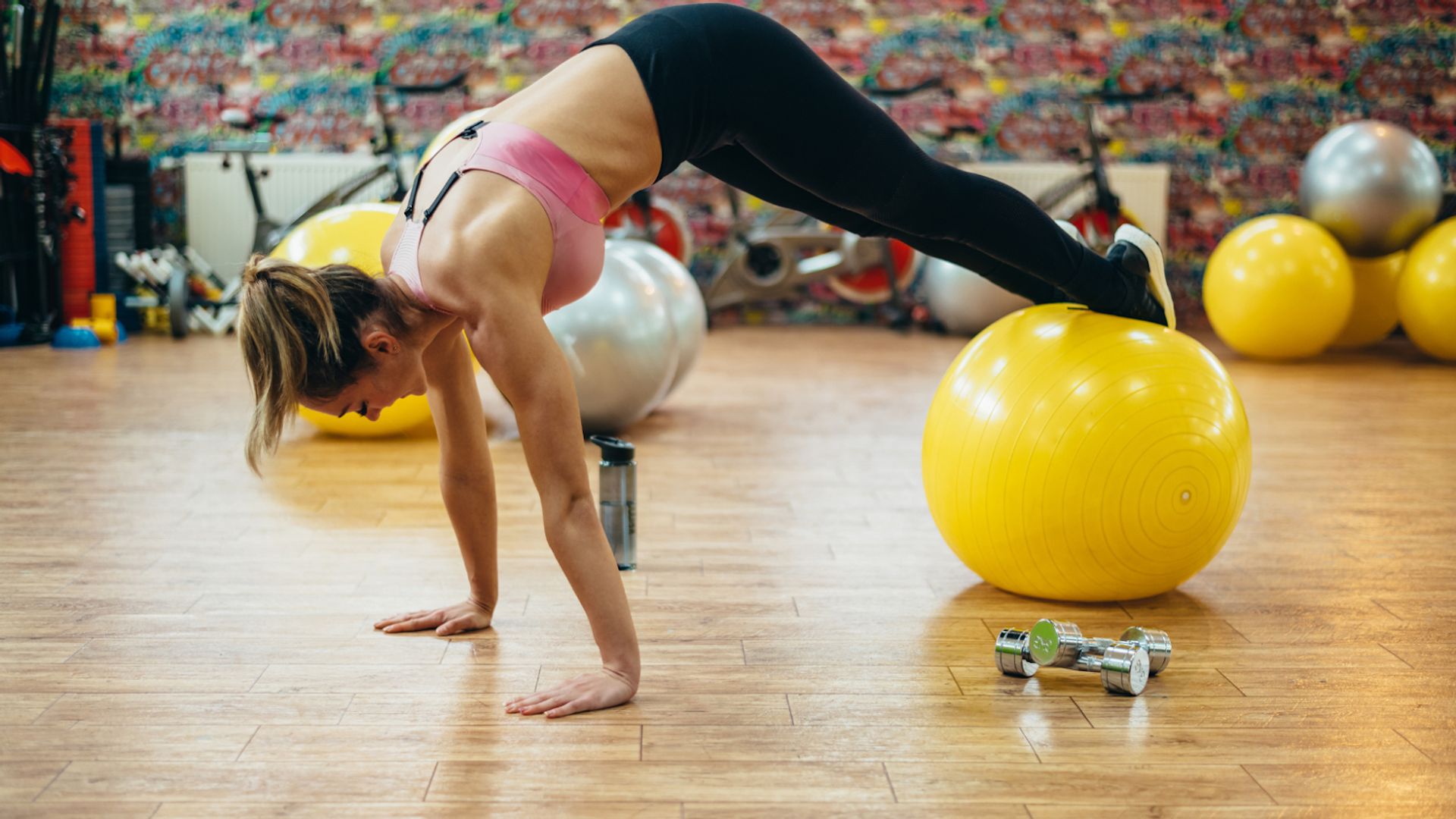
How to do it:
Start in a high plank with your shins or feet on the ball. Use your core to pull your hips up into a pike position, keeping your legs straight. Lower them back down with control.
What it targets:
Upper and lower abs, shoulders, and hip flexors.
Why it works:
This is a major step up from a regular plank. It demands both strength and coordination, making it a go-to move when you're ready for more intensity.
7. Wall Squat with Stability Ball

How to do it:
Place the ball between your lower back and a wall. Step your feet out slightly and lower into a squat. Keep tension in your core as you push back to a standing position.
What it targets:
Quads, glutes, and core stabilizers.
Why it works:
This one sneaks up on you. It may look like a leg move, but it trains your abs to hold you upright and maintain a good spinal position throughout every rep.
8. Deadbug with Stability Ball Press
How to do it:
Lie on your back with the ball pressed between your hands and knees. Extend your right arm and left leg, keeping pressure on the ball with the other hand and leg. Return, then switch sides.
What it targets:
Transverse abdominis, hip flexors, and full-body coordination.
Why it works:
It's one of the most effective ways to train your core while reinforcing good movement patterns. The ball gives you extra resistance and focuses on maintaining tension.
9. Stability Ball Wall Sit with Overhead Press
How to do it:
Place the ball between your lower back and a wall. Hold a light dumbbell in each hand at shoulder height. Lower into a squat while pressing the weights overhead. Return to standing as you lower the weights.
What it targets:Core stabilizers, quads, shoulders, and posture control.
Why it works:
The ball helps keep your spine aligned while your core fights to stay balanced during the press. It’s a sneaky way to challenge your abs while building strength in your upper body.
10. Stability Ball Side Plank Hip Lift

How to do it:
Place your forearm on the ball and stack your feet for a side plank. Once stable, lower your hips slightly, then return to the starting position.
What it targets:
Obliques, glutes, and shoulder stabilizers.
Why it works:
You’re adding movement to an already challenging balance position, forcing your core to stay tight while everything else wants to shift.
How to Build a Core Workout with These Moves

You don’t need to overhaul your routine to get stronger abs. The stability ball exercises listed above are easy to integrate into your existing fitness plan.
Start by picking 3 to 5 of the exercises listed above. Do 2 to 3 rounds, aiming for 8 to 12 controlled reps per move. For any holds (such as the plank), aim for 20 to 30 seconds. If that sounds easy, slow it down. The goal here is to keep your core tight and your movements sharp from start to finish, rather than finishing as quickly as possible.
You can incorporate these into your regular strength days to finish off with focused core work, or use them on recovery days for a lower-impact session that still challenges your body. Either way, your form comes first. That slight shake you feel when the ball starts to wobble? That's your core working overtime, and that's exactly what we're after.
Sticking with these consistently builds not just visible strength but the kind of deep, functional stability that supports everything from better posture to stronger lifts.
Tips for Better Stability Ball Workouts
You don’t need a fancy setup to get the most out of stability ball core exercises. That said, there are a few things that can improve your form, hone your focus, and maximize your results:
Pick the Right Size Ball
The size of your stability ball makes a big difference in how well you can control it.
A good rule of thumb is that when you sit on the ball, your knees should form a 90-degree angle with your feet flat on the ground. Most adults do best with a 55 to 65-cm ball, but taller folks may need to go up to a 75-cm ball.
If the ball's too small or too big, you'll spend more time struggling with balance than actually training your core.
Slow Down to Level Up
Speed can make stability work sloppy. Instead of rushing through reps, take your time with each movement. Slower, controlled reps force your abs to stay switched on longer, and that’s where the real strength gains come from. Think less about counting reps and more about staying steady through the entire range of motion.
Watch Your Alignment
Your spine should stay neutral throughout every exercise. That means no exaggerated arching in your lower back and no hips sinking toward the ground. If you feel tension in your neck or back, stop and reset. Good form makes each move safer and more effective, and it teaches your body how to stay stable in everyday movements as well.
Level-Up With At-Home Personal Training
Stability ball workouts look simple until you try holding a plank while everything wobbles underneath you. That’s where working with a personal trainer really makes a difference.
Svetness in-home personal trainers bring guidance for more effective techniques. They'll show you how to build core strength the right way, using the ball to train balance, control, and coordination. You'll know how to brace your core, how far to roll out, and when to scale a move up or down based on your ability.
And because everything happens in your space, your trainer can design each workout to fit your environment. You’ll train smarter, stay consistent, and start feeling the difference in how you move.
Final Thoughts
Stability ball core exercises may not be flashy, but they are effective. When you stay consistent and slow things down, you'll start to notice a difference in your posture, balance, and overall strength from day to day.
And if you want a little more structure in your routine, Svetness can help. Our in-home trainers provide the guidance and accountability that make workouts stick, including building a core routine tailored to your space, schedule, and goals.
Start with a free consultation and discover how personal training at home can noticeably improve your core workouts.
Frequently Asked Questions
Are stability balls good for the core?
Absolutely. The ball adds just enough instability to wake up your deep core muscles and make every rep count. Instead of relying on momentum, your body has to work harder to stay balanced, which means more strength, better control, and stronger posture in the long run.
What are the big 3 core stability exercises?
Think of these as your go-to staples: the plank, dead bug, and bird-dog. Each one trains your core to resist movement, which is key for balance and injury prevention. Add a stability ball to the mix, and you’ll turn those classics into full-body challenges that build real-world strength.
Is a stability ball good for seniors?
Yes, and it’s one of the most joint-friendly tools out there. A ball can support the spine, improve balance, and make core exercises more approachable. The key is to choose movements that match your current ability and focus on slow, steady control.
How long should you sit on a stability ball?
If you're using a stability ball as a chair, start with short intervals for about 20 to 30 minutes at a time. This gives your core a chance to engage without overloading your back or hips. It’s a good idea to alternate between the ball and a regular chair throughout the day to avoid fatigue and maintain good alignment.
Start your Svetness journey today
Get a free consultation and see how our trainers can transform your wellness journey.