Trainers' Top Arm Workouts: No Equipment Edition

Think you need dumbbells for toned arms? Bodyweight exercises can be used for at home arm workouts, no equipment necessary. It's simpler than you think.
I often hear from people who are convinced that building impressive arm strength is a privilege reserved for those with a gym membership or a dedicated set of dumbbells. The perception is that without heavy iron to lift, you’re just spinning your wheels. I’m here to tell you that this is one of the most persistent myths in fitness.
The truth is, your own body is the only tool you need to forge strong, sculpted, and incredibly functional arms. The idea that you need external weights to create resistance is a fundamental misunderstanding of how muscles actually grow and adapt. Your bodyweight provides a formidable and infinitely adjustable source of resistance that can challenge you for a lifetime.
Learning exercise routines without using weights can be a temporary fix while separated from your usual equipment, or a long-term strategy. You can build the arms you want, wherever you are.
We will delve into some of the most effective arm workouts, no equipment needed, that our trainers swear by. We're not just going to teach a few push-up variations. We're laying out a complete system for developing arm strength and definition that you can take with you anywhere.
The Truth About Bodyweight Arm Training
To appreciate the power of bodyweight training, it’s helpful to understand the basic principle of muscle growth, known as hypertrophy. Muscles grow when they are subjected to stress that causes microscopic damage to their fibers. The body then repairs these fibers, making them thicker and stronger to handle future stress.
This stress can come from lifting a dumbbell, or it can come from lifting your own body. Your muscles don’t differentiate between the source of the resistance, they only respond to the demand placed upon them. The elegance of bodyweight training lies in its accessibility and its focus on compound movements.
How does bodyweight training help me in everyday life?
Many bodyweight exercises for the arms also engage the core, back, and chest, leading to a more holistic development of strength. This functional strength is incredibly valuable for everyday life, making tasks like carrying groceries or lifting a child feel easier and safer. It’s a type of strength that is built from the inside out, creating a solid foundation of power and stability.
The key is to consistently challenge your muscles and focus on impeccable form, which we will cover in more detail. A critical component of this is the mind-muscle connection. This is the conscious and deliberate effort to feel the target muscle working during an exercise. By focusing your attention on the muscle you intend to train, you can enhance its activation and stimulation, leading to better results from your arm workouts with no equipment.
Why Arm Workouts, No Equipment Style, Are So Effective
At Svetness, our philosophy is centered on making fitness accessible and sustainable for everyone. We believe that your fitness journey should adapt to your life, not the other way around. This is why we are such strong proponents of arm workouts, no equipment required.
The beauty of this approach is its sheer simplicity and convenience. You don’t need to carve out time to travel to a gym or invest in expensive equipment that might end up gathering dust. Your living room, a park, or even a hotel room can become your personal training ground. This removes many of the common barriers that prevent people from staying consistent with their fitness goals.
When your workout is always available, you are more likely to do it. This approach also fosters a deeper connection with your own body. You become more attuned to its capabilities and limitations, and you learn to appreciate the incredible things it can do. It’s an empowering feeling to know that you have everything you need to build a strong and healthy body.
Ways to Exercise Your Arms Without Equipment
For those looking to build muscle at home, no equipment workouts are a great starting point. Here are some arm workouts, no equipment needed, that you can begin to tone your arms at home.
Exercise Guide: Arm Workouts, No Equipment
<table border="1" cellpadding="8" cellspacing="0" style="border-collapse: collapse; width: 100%;">
<thead>
<tr>
<th>Muscle Group</th>
<th>Exercise</th>
<th>How To Perform</th>
<th>Beginner Modification</th>
<th>Advanced Variation</th>
</tr>
</thead>
<tbody>
<tr>
<td>Biceps</td>
<td>Chin-Up</td>
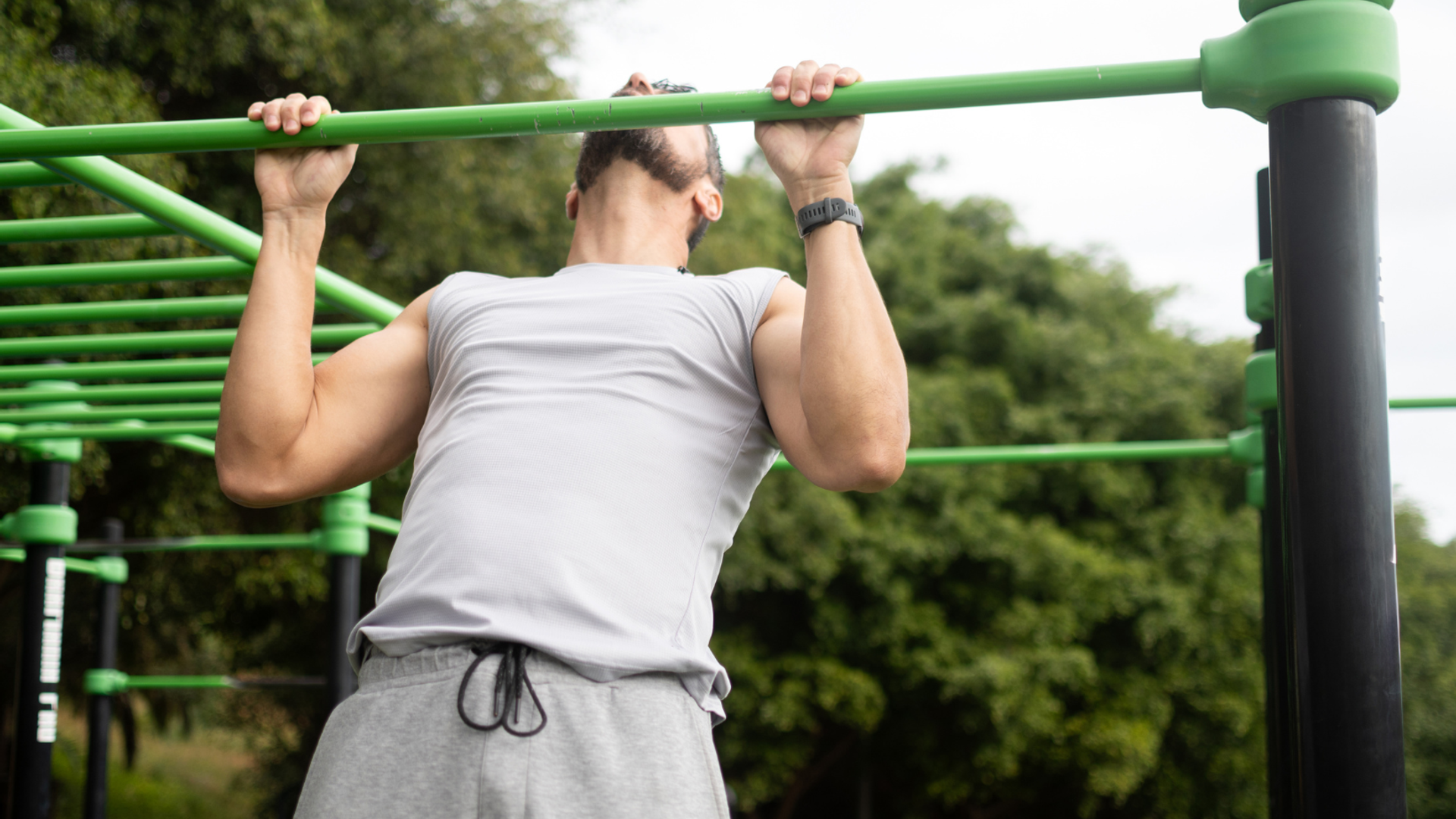
<td>Grip a pull-up bar with palms facing you and pull your body up until your chin clears the bar.</td>
<td>Negative chin-up: Jump to the top position and slowly lower yourself down to build eccentric strength.</td>
<td>Towel grip chin-up: Drape a towel over the bar and grip the ends to challenge grip strength and further isolate the biceps.</td>
</tr>
<tr>
<td>Biceps</td>
<td>Inverted Row</td>
<td>Lie under a sturdy table, grab the edge, and pull your chest up towards it.</td>
<td>Increase the angle of your body (more upright) to reduce resistance.</td>
<td>Lower your body angle closer to horizontal to increase resistance as you get stronger.</td>
</tr>
<tr>
<td>Triceps</td>
<td>Diamond Push-Up</td>
<td>Place hands close together on the floor forming a diamond shape with thumbs and index fingers, then perform a push-up.</td>
<td>Start on your knees and progress to a full plank position.</td>
<td>Progress to a full plank position with slow, controlled reps.</td>
</tr>
<tr>
<td>Triceps</td>
<td>Dip</td>
<td>Using a chair, bench, or couch edge, keep your back close to the object and lower yourself until elbows reach a 90-degree angle.</td>
<td>Use a higher surface to reduce the range of motion.</td>
<td>Elevate your feet on another chair or bench to increase resistance.</td>
</tr>
<tr>
<td>Shoulders</td>
<td>Pike Push-Up</td>
<td>Start in a downward dog position, then bend elbows to lower the top of your head toward the floor, mimicking an overhead press.</td>
<td>Keep feet flat on the floor to reduce load on the shoulders.</td>
<td>Elevate feet on a chair or box to increase the challenge.</td>
</tr>
<tr>
<td>Shoulders</td>
<td>Plank to Downward Dog</td>
<td>Start in a high plank, then push hips up and back into a downward dog; hold briefly, then return to plank.</td>
<td>Slow the movement down and hold each position longer to build stability.</td>
<td>Wall handstand: Hold a handstand against a wall as an isometric exercise for building shoulder strength and stability.</td>
</tr>
</tbody>
</table>
Start your Svetness journey today
Get a free consultation and see how our trainers can transform your wellness journey.
Progressive Overload Without Weights
One of the most common questions I get about bodyweight training is how to keep making progress. The principle of progressive overload states that you must continually increase the demands on your muscles to stimulate growth. While this is straightforward with weights (you just add more plates), it requires a bit more creativity with bodyweight exercises.
One of the most effective techniques is to manipulate time under tension (TUT). This means slowing down the tempo of your exercises. For example, instead of doing a push-up in two seconds, try taking three seconds to lower yourself and three seconds to push back up. This increases the total time your muscles are working and can lead to significant strength gains.
You can also increase the number of repetitions or sets you perform, or decrease your rest time between sets. Another powerful method is to play with leverage. By changing the angle of your body, you can make an exercise harder or easier. For example, a push-up with your feet elevated is much more challenging than a standard push-up.
Unilateral training, or training one limb at a time, is another excellent way to increase the intensity. For example, you can progress from a standard push-up to a one-arm push-up. These are just a few of the ways you can continue to make the most of your best at-home workouts for toning, and keep your arm workouts no equipment sessions effective over time.
Playing the Long Game with Bodyweight Training
I like to think of bodyweight training as a long-term investment in your health and well-being. It’s not a get-fit-quick scheme; it’s a sustainable practice that will pay dividends for years to come. The National Institute on Aging confirms that resistance training triggers important molecular changes that build up cumulatively over time. Even low-intensity programs deliver substantial benefits.
In competitive sports, the best athletes are those who have refined the fundamentals. They have spent countless hours honing their skills and building a solid foundation. Bodyweight training is the fitness equivalent of this. It's about commanding your own body and building a level of strength and control that will serve you in all aspects of your life. It teaches you patience, discipline, and a deep appreciation for the process.
There will be days when you feel strong and days when you struggle. The important thing is to keep showing up and putting in the work. Over time, you will be amazed at what you can achieve.
Building Arm Strength on Your Own Terms
The arm exercises and principles we’ve discussed are a great starting point, but they are just the beginning. The real magic happens when you start to experiment, listen to your body, and take ownership of your fitness.
You have the power to build strong, capable arms without ever stepping foot in a gym. All it takes is a little knowledge, a lot of consistency, and the belief that you are your own best piece of equipment.
So, are you ready to redefine what’s possible and start your Svetness journey with arm day workouts at home? We are here to help you every step of the way. This is your invitation to reach a new level of strength, confidence, and physical autonomy.
Frequently Asked Questions
How often should I do these arm workouts?
For optimal results, I recommend performing these arm workouts two to three times per week on non-consecutive days. This gives your muscles adequate time to recover and grow. Remember, rest is just as important as the workout itself.
Can I build muscle with just bodyweight exercises?
Absolutely. As we’ve discussed, your muscles respond to resistance, and your bodyweight provides plenty of it. By using techniques like progressive overload and focusing on proper form, you can build significant muscle mass and strength with bodyweight training alone.
What if I can't do a full push-up or chin-up yet?
That’s perfectly fine. Everyone starts somewhere. The key is to use modifications to build up your strength. For push-ups, you can start on your knees or do them against a wall. For chin-ups, you can use a resistance band to assist you or focus on the negative portion of the movement. The goal is to challenge yourself, not to perform every exercise perfectly from day one. Consistency and gradual progression are what matter most.
How long will it take to see results?
This is a common question, and the honest answer is that it varies for everyone. Factors like your current fitness level, consistency, diet, and genetics all play a role. However, with consistent effort, you can expect to see noticeable improvements in your strength and muscle definition within a few weeks. The key is to stay patient and focus on the process, not just the outcome.
Start your Svetness journey today
Get a free consultation and see how our trainers can transform your wellness journey.