Mobility Training at Home: Why It Matters for Long-Term Fitness

Mobility training at home can improve how you move, lift, and stay active. See simple drills and ways to add mobility to your week.
Being able to touch your toes does not always mean you move well. Mobility is about having a useful range of motion that you can control.
You use mobility when you squat, reach overhead, rotate your upper back, or step into a lunge. Those movements show up in workouts and everyday life, which is why mobility can support your fitness over time.
Mobility training at home does not need to mean spending 30 minutes stretching before every workout. A few focused drills may be enough. Strength training can also help you build control through a wider range of motion.
A Svetness personal trainer can look at how you move and add mobility work where it makes sense. That can be more useful than giving everyone the same stretching routine.
In this article, we’ll explain what mobility is, why it can help, how to use a short routine at home, and how mobility can support strength and long-term fitness.
Start your Svetness journey today
Get a free consultation and see how our trainers can transform your wellness journey.
What Is Mobility Training?
Mobility is often confused with flexibility. The two are related, but they are not exactly the same.
Flexibility is more about how much range you can reach, sometimes with help. Mobility puts more focus on moving through a range with your own control.
Think about raising one leg. If you lie down and use a strap to pull your leg toward you, you are using outside help to reach that range. If you lift the leg into that position using your own muscles, you need more active control.
Our guide to mobility training and its benefits explains this idea in more detail. The goal is not simply to stretch farther. You want to move well through ranges that are useful for your body and activities.
Why Does Mobility Matter for Fitness?
Exercise asks your body to move through certain positions. If you cannot reach or control one of those positions, the exercise may feel harder or less comfortable.
Ankle mobility can affect how some people squat. Shoulder movement can affect overhead exercises. Hip mobility can change how a lunge or other lower-body exercise feels.
That does not mean every person needs the same range of motion. A gymnast, runner, powerlifter, and someone who exercises for general health may all need different levels of mobility.
Mobility training at home should support the activities you care about. You need enough movement for the things you want to do, not the largest range you can force your body into.
If hip movement is one area you want to work on, our guide to improving hip stability through exercise covers ways to build strength and control around the hips.
Mobility Doesn't Mean Becoming Extremely Flexible
More range of motion is not always better. Some people are naturally very flexible. They may get more benefit from building strength and control in the range they already have than from trying to stretch farther.
Your goals also matter. A sport such as gymnastics may require ranges of motion that are not needed for general strength training or daily life.
Use mobility work to solve a real movement problem or support an activity. You do not need to turn flexibility into a competition.
Strength Training Can Improve Range of Motion Too
Mobility and strength do not have to be treated as two separate parts of fitness. Strength exercises can also improve range of motion when you use a suitable range and stay in control.
A 2023 systematic review and meta-analysis looked at 55 studies and found that resistance training improved joint range of motion. In the studies reviewed, training with outside resistance produced gains that were similar to stretching.
Stretching can still be useful, and some of the mobility work you need may already be happening during a good strength workout.
Split squats, squats, presses, rows, and other strength exercises can train both movement and control when they are chosen well.
Train the Range You Can Control
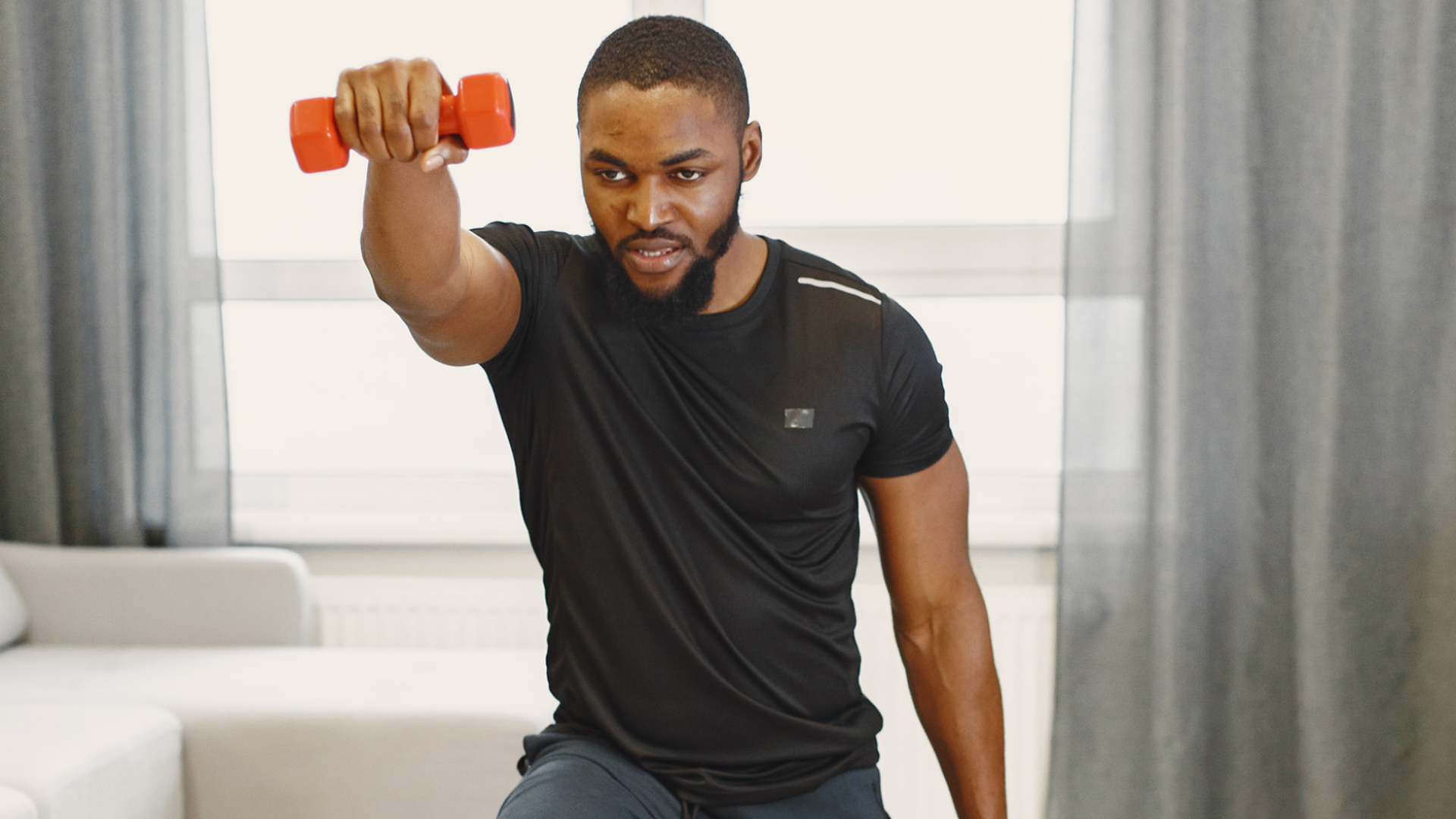
You may hear that every exercise should use a full range of motion. That advice needs some context. Your current full range may look different from someone else's. If you can squat to a certain depth with good control, that can be a sensible place to start.
Forcing yourself lower because someone online says everyone should sit in a deep squat is not a useful goal. You can work on more range over time if it helps you.
Research has found benefits to training through a fuller range in some cases. One systematic review and meta-analysis found better gains in strength and lower-body muscle growth with full-range training than partial-range training in the studies reviewed.
The key is to use a range that fits your current ability. You can build from there as your control improves.
A Simple Mobility Training at Home Routine
You do not need 20 exercises to work on mobility. A short routine can cover several areas that often benefit from regular movement.
This mobility training at home routine can take about 5 to 10 minutes. Use it as an example, not a rule that every person must follow.
Ankle Rock
Stand facing a wall with one foot in front. Keep the front heel down and gently move the knee toward the wall. Return to the starting position and repeat for 8 to 10 controlled reps on each side.
You should feel movement around the ankle. Do not force the knee farther if the position starts to hurt.
Supported Deep Squat
Hold a sturdy support and slowly lower into a squat that feels comfortable. Use the support to help you control the movement. Pause for a moment, then stand back up. Try 5 to 8 reps.
If a deep squat does not feel good right now, stay higher. You can work on more depth later as the movement becomes easier.
Half-Kneeling Hip Movement
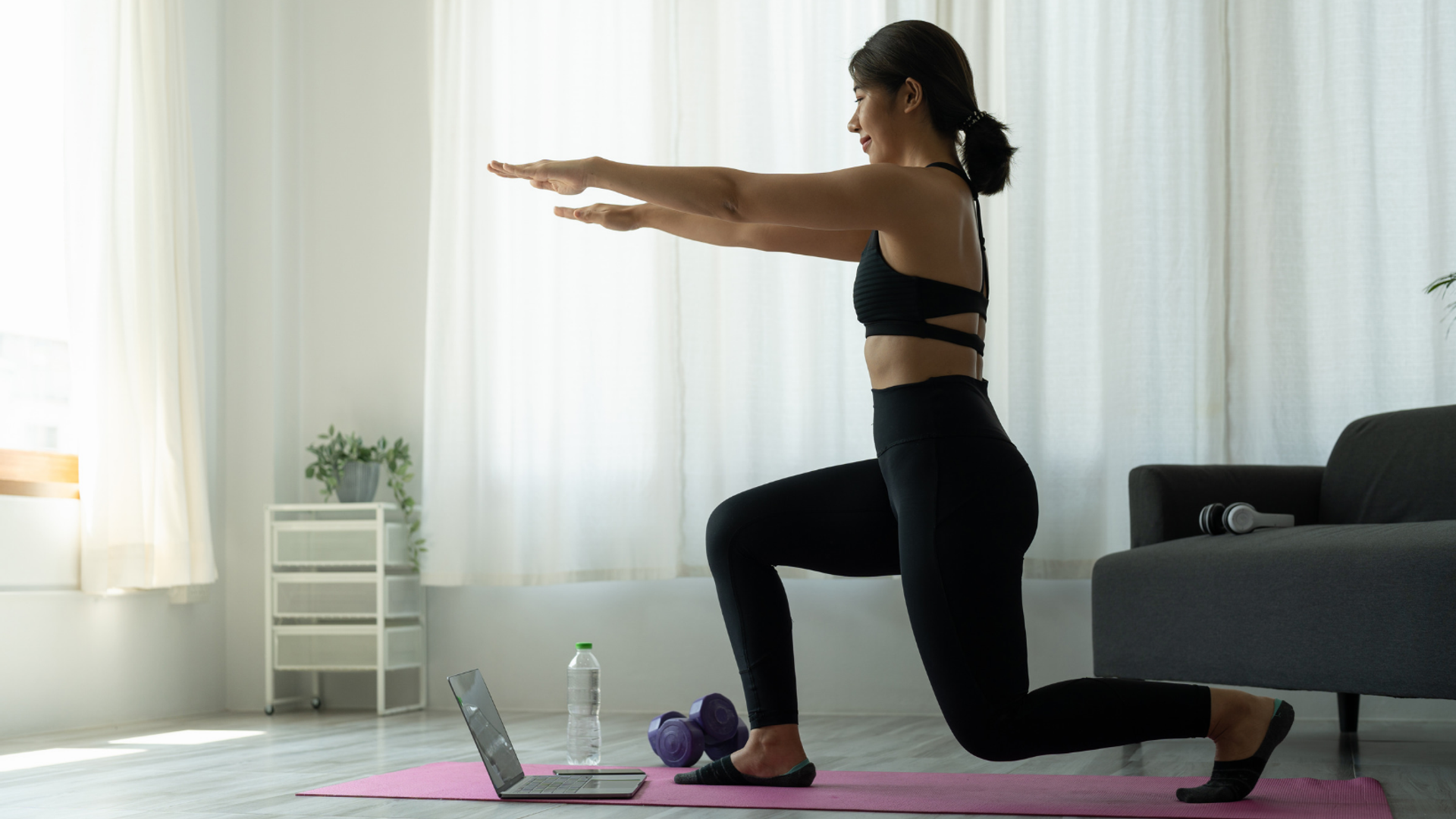
Get into a half-kneeling position with one knee on a padded surface. Slowly move your hips and body forward until you feel a gentle stretch near the front of the hip.
Return to the start and repeat 6 to 10 times on each side. Keep the movement small enough that you stay in control. You do not need to arch your lower back to make the stretch feel bigger.
Thoracic Rotation
Start on your hands and knees or use another supported position that feels comfortable. Turn through your upper body in a slow, controlled motion, then return to the starting position. Aim for 6 to 8 reps on each side.
Focus on smooth movement. You do not need to force the biggest turn you can manage.
Shoulder Wall Slide
Stand near a wall with your arms in a comfortable starting position. Slowly move your arms upward, then bring them back down.
Use a range that feels controlled and pain-free. Try 6 to 10 reps. If one position causes pain, make the range smaller or stop the drill.
When Should You Do Mobility Training?
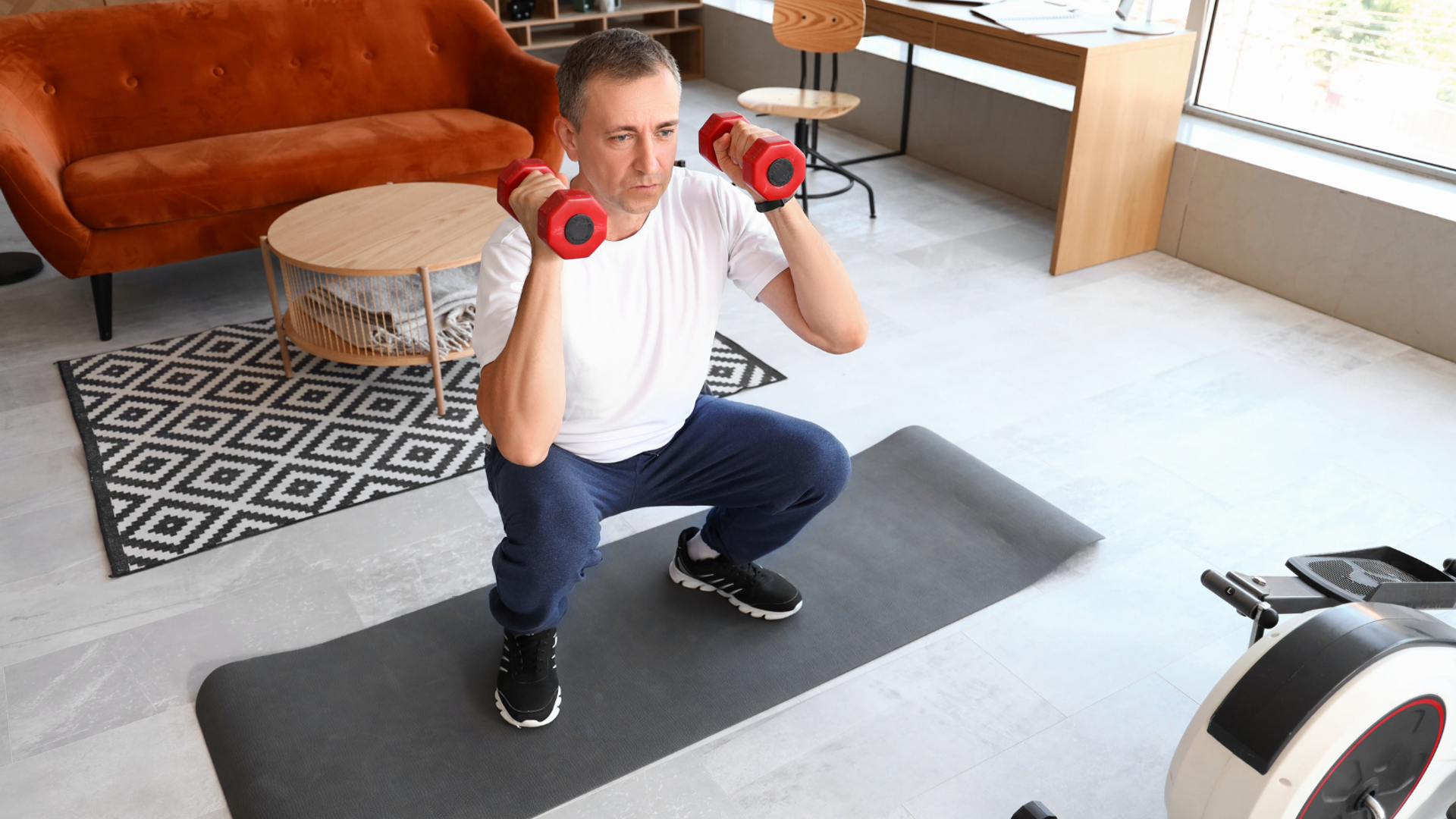
Mobility work can fit into your week in several ways. It does not always need its own full workout.
The best time will vary based on why you are doing it and what else is in your training plan.
Before Strength Training
A few mobility drills can work well as part of your warm-up. Before a lower-body workout, you might use ankle, hip, and squat movements. Before an upper-body workout, shoulder and upper-back drills may be more useful.
You do not need to work on every joint before every session. Pick movements that prepare you for the workout ahead.
Between Workouts
You can also do a short mobility session on another day. This may help if you want to spend more time on one area without making your warm-up too long. A 5- or 10-minute routine can be enough.
Mobility training at home can fit well here because you do not need a gym or much equipment. You can work on a few movements and then get on with your day.
During Strength Training
Some mobility work can happen during the strength exercise itself. A split squat moves the hips, knees, and ankles through useful ranges while also building strength. An overhead press can help you build control in that position when the movement fits your ability.
Start your Svetness journey today
Get a free consultation and see how our trainers can transform your wellness journey.
Dynamic Mobility Can Work Well in a Warm-Up
Movement-based drills can be a good choice before exercise. A review of different stretching methods found that dynamic stretching could lead to small gains in later performance. Long periods of static stretching right before activity could lead to small drops in some types of performance.
For a normal home workout, the lesson is simple. Let your warm-up start to look a little like the workout you are about to do.
Before squats, move your ankles, hips, and knees and try a few easy squat reps. Before presses, move your shoulders and use a lighter version of the press.
Static Stretching Still Has a Place
Mobility and flexibility are different, but that does not make static stretching useless. Holding a stretch can help improve range of motion. Some people also enjoy it and feel better after a short stretching session.
Use static stretching when it supports a real goal or feels helpful. You may want more flexibility in one area for a sport or exercise.
Just be careful about giving stretching credit for things it may not do. Reviews of the research have not found clear proof that stretching alone prevents all sports injuries.
Stretch because you have a reason to stretch. Do not treat a few minutes of stretching as protection against every possible injury.
Mobility Training Should Be Specific
A good mobility plan should focus on the movement you are trying to improve. If your ankles are limiting your squat, spending 15 minutes stretching your shoulders will not help much. If your shoulder movement is the problem, working on your hamstrings will not solve it.
Start with the movement that feels limited. Then look at what may be getting in the way.
Sometimes you need more range. Other times you may have enough range but need more strength or control. In some cases, the exercise itself may need to change.
That is one reason a trainer can be useful. They can watch you move instead of labeling every difficult exercise as a mobility problem.
Sitting All Day Doesn't Require a Fix for Everything
People who work at a desk are often told that sitting has “switched off” muscles or ruined their posture. Be careful with broad claims like that.
Sitting for a long time can make you feel stiff, and getting up to move can feel good. That does not mean your body is damaged because you have a desk job.
Build more movement into your day. Stand up, walk around, change positions, and include strength training in your week.
If one movement feels limited during an activity, focus on that area. You do not need a long correction routine simply because you use a laptop for work.
Don't Force Painful Positions
Mobility work may create a mild stretch or some muscle effort. Sharp pain is different. Do not keep forcing a joint farther because you think pain means the drill is working. Use a smaller range or choose another movement.
Pain that is severe, gets worse, keeps coming back, or has no clear cause should be checked by a healthcare professional.
A personal trainer can adjust an exercise around your current ability. They should not try to diagnose an injury or medical condition.
How Often Should You Work on Mobility?
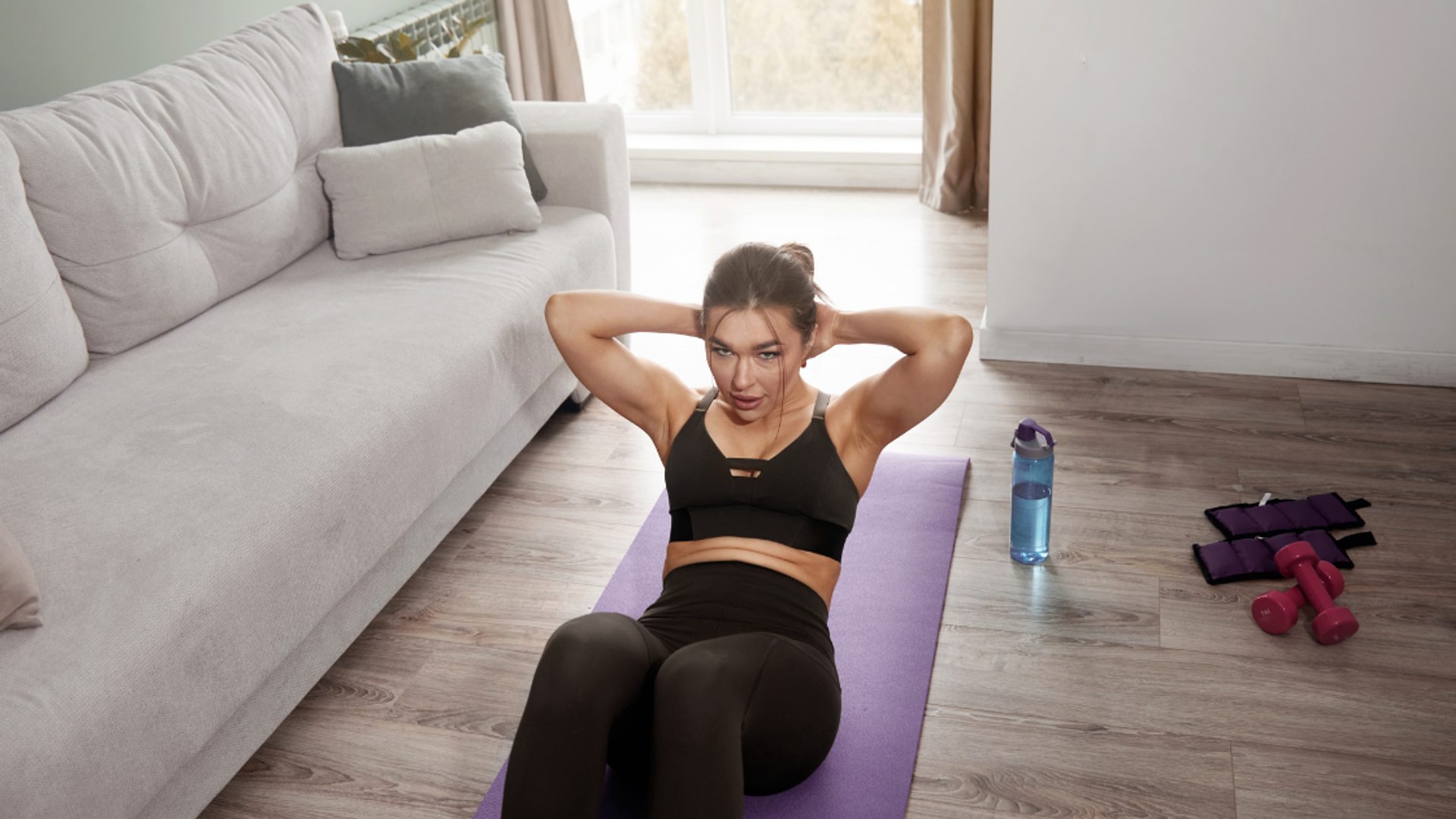
There is no single schedule that works for everyone. If you mainly want to move well during your workouts, a few mobility drills in your warm-ups may be enough. If you have one range you are trying to improve, you may benefit from more regular practice.
A simple week could look like this:
- Monday: Strength training with a 5-minute mobility warm-up
- Tuesday: Short mobility session or walking
- Wednesday: Strength training with a short warm-up
- Thursday: Normal daily activity
- Friday: Strength training with a short warm-up
- Weekend: Optional mobility work, cardio, or another activity you enjoy
Mobility does not need to take over your week. Short sessions done often enough can be more useful than doing a very long routine once in a while.
How Do You Progress Mobility Training?
Mobility can improve over time just like strength. Progress may mean reaching a little farther, but that is only one option. Better control, more strength in a position, and greater comfort can all show improvement.
Imagine that you need to hold a support while squatting to a comfortable depth. After some practice, you may need less help from the support.
Later, you may be able to squat to the same depth on your own. You might then add a little resistance.
That is useful progress because you are gaining control of the new range instead of chasing a temporary feeling of being loose.
Mobility Is Most Useful When It Supports Strength
Long-term mobility works well when you can control the positions you reach. That may mean getting stronger in a deeper split squat, controlling your arm overhead, or moving through a larger squat range without losing balance.
A 2025 meta-analysis of 36 studies and 1,469 healthy adults also found that resistance training improved joint flexibility. The authors noted that the studies varied a lot and had some limits, so the findings should still be read with care.
The larger point is that strength and mobility can support each other. You do not always have to choose between training to be strong and training to move well.
How Mobility Supports Long-Term Fitness
Long-term fitness is about keeping your body useful for the things you want to do. That might mean getting down to the floor and standing back up, reaching into a high cabinet, climbing stairs, gardening, hiking, playing a sport, or lifting weights.
Mobility can support those tasks because it gives you more movement options. It is still only one part of long-term fitness.
Strength, cardio fitness, balance, and regular activity all have roles too. That is why mobility works best as part of a full fitness plan instead of being treated as the answer to every movement problem.
Mobility training at home can be especially useful because it is easy to fit into your routine. You can work on a few targeted movements without adding another trip to a gym or another long workout.
How an In-Home Personal Trainer Can Help
Mobility is personal. An online routine cannot see how you squat, reach, hinge, or move through a lunge.
A trainer can watch those movements and decide whether more mobility work is useful. They can also see if the issue is more about strength, control, exercise choice, or setup.
That may mean doing ankle work before a lower-body session. It could mean building shoulder control before pressing. It may also mean doing very little separate mobility work because your strength plan already covers the ranges you need.
Our guide to the benefits of an in-home personal trainer explains how training can be shaped around your ability, goals, schedule, and available space.
At Svetness, our trainers can bring mobility work into the rest of your program instead of adding drills simply to make the workout look more complex. The goal is to use exercises that help you move and train better.
Make Mobility Part of Training

Mobility training at home does not need to become another long task on your fitness checklist. Start with the movements your workouts and daily life ask you to do. Use ranges you can control during strength training, and add a few mobility drills when there is a clear reason for them.
You may only need five or 10 minutes at a time. In other cases, your strength exercises may already be helping you improve how you move. The goal is not to become as flexible as possible. You want enough range, strength, and control to keep doing the activities you enjoy.
If you want help figuring out which areas need more mobility work, a Svetness trainer can build those exercises into a plan based on the way you move.
Book Your Free Svetness Consultation
FAQs
What is mobility training?
Mobility training helps you move your joints through useful ranges with control. It can include movement drills, stretching, and strength exercises that use a suitable range of motion.
What is the difference between mobility and flexibility?
Flexibility is more about how much range you can reach, sometimes with outside help. Mobility puts more focus on your ability to control that range using your own muscles.
Can you improve mobility at home?
Yes. Many mobility drills need little or no equipment. Strength exercises can also help improve range of motion when you use a suitable range and stay in control.
How long should a mobility routine take?
A short 5- to 10-minute routine can be enough for a few areas that need attention. The right length depends on your goals and what other exercise you are doing.
Can strength training improve mobility?
Yes. Research has found that resistance training can improve joint range of motion. Exercises that move through a useful range can help you build both strength and control.
Start your Svetness journey today
Get a free consultation and see how our trainers can transform your wellness journey.