At-Home Workout Plan for Beginners: A Simple Weekly Structure

Follow this at-home workout plan for beginners with two strength days, easy cardio, rest, and simple ways to progress each week.
Starting an exercise routine at home should make fitness easier to fit into your life. It should not leave you scrolling through dozens of workouts and wondering which one to do next.
As a beginner, you do not need a new routine every day or an hour of exercise seven days a week. You can make progress with a few basic movements, regular walks or easy cardio, and enough time to recover.
A good at-home workout plan for beginners gives you a weekly structure you can repeat. Two full-body strength workouts are a simple place to start. You can then add light activity on other days and increase the challenge as your fitness improves.
In this article, we’ll give you a simple weekly workout plan, five beginner strength exercises, ways to make the routine harder over time, and tips for handling soreness, missed workouts, and other common problems.
Start your Svetness journey today
Get a free consultation and see how our trainers can transform your wellness journey.
Start With a Simple Weekly Plan

Your first workout plan does not need to fill every day with hard exercise. The goal is to build a routine you can repeat without feeling worn out by the end of week one.
Here is one way to structure your week:
- Monday: Complete a full-body strength workout.
- Tuesday: Go for an easy walk or do another form of light cardio.
- Wednesday: Rest or stick with gentle daily activity.
- Thursday: Repeat your full-body strength workout.
- Friday: Go for another walk or easy cardio session.
- Saturday: Choose an activity you enjoy, such as walking, biking, swimming, or gardening. You can rest instead if you need it.
- Sunday: Take a rest day before beginning the week again.
You do not have to use those exact days. Tuesday and Friday could be your strength days if that fits your schedule better. Your walks can move too.
The main idea is to keep the two strength workouts apart at first. This gives your body time to recover before you train the same muscles again.
At-home personal training should fit your real week. A schedule you can follow for several months will usually work better than an ambitious routine you give up after ten days.
What You Need to Get Started
You can begin home workouts with very little equipment. A sturdy chair and enough clear floor space can cover several of the exercises in this plan.
An exercise mat can make floor exercises more comfortable. A resistance band is useful for pulling exercises, and light dumbbells can give you more options later. You do not need to buy everything before your first workout.
Bodyweight movements can help you learn basic exercise patterns before you add more resistance. If you want more ideas, our guide to strength training exercises for beginners at home covers more beginner-friendly movements and ways to scale them.
Start with what you have. You can add equipment when your current routine becomes too easy or when it gives you a useful new exercise option.
Your Beginner Strength Workout
Your two strength days can use the same five exercises for the first few weeks. Repeating them gives you time to get comfortable with each movement instead of learning a whole new workout every few days.
Start with one or two sets of each exercise. Rest when you need to, and focus on smooth, controlled movement.
Sit-to-Stand Squat
Start with 1 to 2 sets of 8 to 12 reps.
Stand in front of a sturdy chair with your feet in a comfortable position. Sit down slowly, then push through your feet to stand back up.
Use your hands for support if you need them. As the movement becomes easier, try using less help from your hands. Later, you may be ready for a bodyweight squat without the chair.
Wall Push-Up
Start with 1 to 2 sets of 8 to 12 reps.
Place your hands against a wall around shoulder height. Walk your feet back until your body is at a comfortable angle.
Bend your elbows and bring your body toward the wall. Push through your hands to return to the starting position.
Once wall push-ups feel easy, you can move to a sturdy raised surface, such as a secure counter. A lower surface makes the exercise harder.
Glute Bridge
Start with 1 to 2 sets of 8 to 12 reps.
Lie on your back with your knees bent and your feet on the floor. Press through your feet and lift your hips.
Pause for a moment, then lower your hips with control. Use a range of motion that feels comfortable instead of trying to lift as high as possible.
Resistance Band Row
Start with 1 to 2 sets of 8 to 12 reps.
Use a resistance band only if you have a safe setup that follows the manufacturer’s instructions. Pull your elbows back in a controlled motion, then slowly return to the starting position.
Do not tie or attach a band to furniture that may move or break. If you do not have a safe place to use a band, skip this exercise until you have the right setup or another safe pulling exercise.
Dead Bug
Start with 1 to 2 sets of 5 to 8 reps per side.
Lie on your back and begin with an easy version of the movement. Move one arm or leg at a time while keeping the rest of your body steady.
You do not need to start with the hardest version. Choose the variation you can control.
How Long Should Your Workout Take?
A first strength session may take around 20 to 30 minutes, especially if you begin with one set of each exercise.
That is plenty of time to start. Your early workouts are about building skill and getting used to exercise, so there is no need to make the first session as long or difficult as possible.
As the exercises become more familiar, you may add a second set or take a little more time with each movement.
Why This Weekly Plan Works
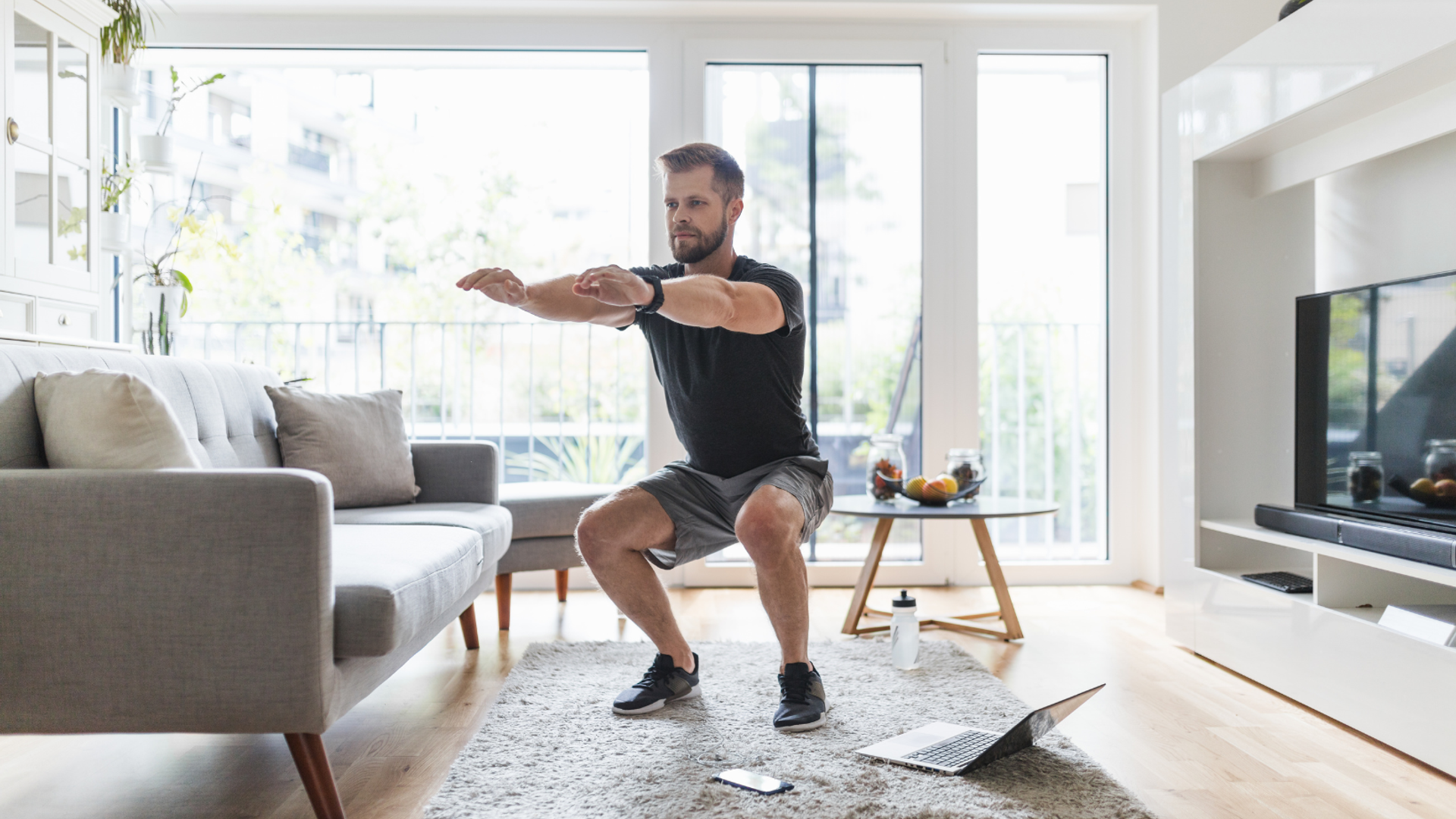
A simple at-home workout plan for beginners gives you time to practice the exercises without filling the whole week with hard workouts. You are learning new movements, so your body and your mind both need time to get used to them.
Full-Body Workouts Keep Things Simple
Beginners usually do not need a workout split that gives different body parts their own training days.
Training your chest on Monday, back on Tuesday, legs on Wednesday, and other muscles later in the week creates more sessions to plan. It can also mean that missing one day causes you to skip one area for a full week.
A full-body workout lets you practice several basic movements in one session. If you train twice a week, you get two chances to work on each movement without filling your calendar with gym-style training days.
Two Strength Days Give You Time to Recover
Two weekly strength workouts can be a manageable starting point. You get to practice the exercises more than once while still having several days for rest and easier activity. You can add more later. Starting with two days does not mean you must stay there forever.
Research on low-volume strength training also suggests that beginners can improve with less training than many people expect. You do not need a high-volume bodybuilding routine during your first month.
Workouts Should Feel Challenging, Not Out of Control
You should feel like you are exercising, but every set does not need to push you as hard as possible. If you plan to do 10 reps and your form starts falling apart at six, the exercise may be too hard right now. Try an easier version, use less resistance, or stop the set sooner.
If you finish 10 reps and feel like you could easily do 20 more, you may be ready for a little more challenge. You do not have to get that balance perfect in your first workout.
Part of being a beginner is learning what different levels of effort feel like.
Take Enough Rest Between Sets
You do not need to race through the workout. A minute or two between sets may be enough during a light beginner session. Take longer if you are still breathing hard or do not feel ready to repeat the movement with good control.
Strength training at home does not need to turn into a nonstop cardio workout. Rest gives you a better chance to perform the next set well.
Add Easy Cardio Between Strength Days
Your cardio days can be simple. Walking is one of the easiest options because it does not require equipment and you can change the time and pace to match your fitness.
Start with a length that feels manageable. That might be 10 minutes if you have been inactive, 20 minutes if you already walk a little, or longer if walking is already part of your normal week.
You can use a stationary bike, swim, or choose another low-impact activity instead. The activity should feel manageable enough that you are not still exhausted when your next strength day arrives.
You do not need to turn every cardio session into a hard interval workout. Early on, building the habit of regular movement is enough.
A simple way to progress walking is to add a few minutes over time. You might walk for 15 minutes during week one, 18 minutes during week two, and 20 minutes during week three.
You can repeat the same amount too. Progress does not have to happen during every single workout.
Start your Svetness journey today
Get a free consultation and see how our trainers can transform your wellness journey.
How to Make the Plan Harder
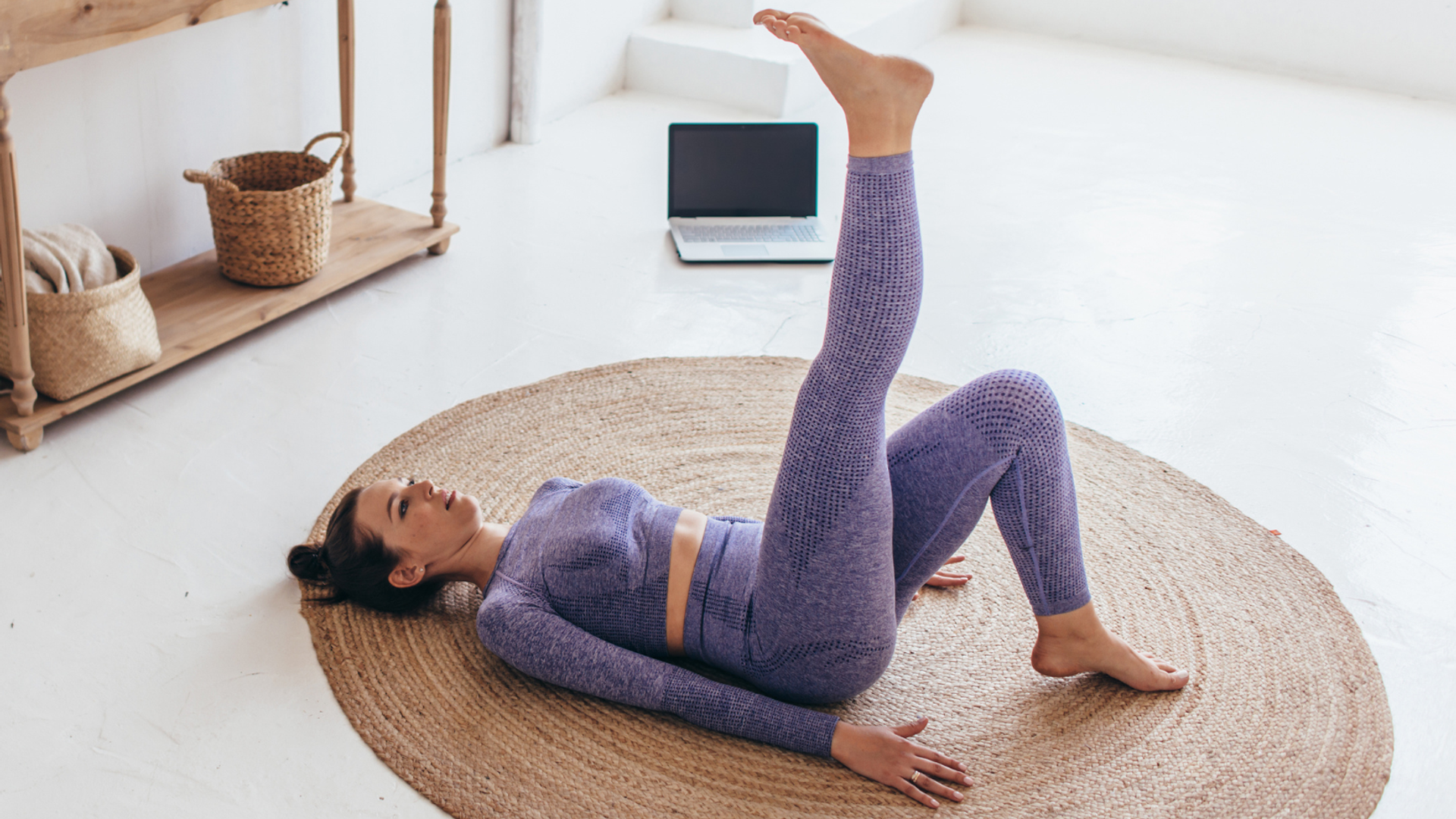
Your body will get used to the same workout over time. Once that happens, you need a little more challenge if you want to keep improving.
The good news is that you have several ways to do that. You can add reps, add another set, use more resistance, or choose a harder version of the exercise. Change one thing at a time instead of making the whole workout harder at once.
For example, your sit-to-stand squat might look like this:
- Week 1: 1 set of 8 reps
- Week 2: 1 set of 10 reps
- Week 3: 2 sets of 8 reps
- Week 4: 2 sets of 10 reps
This is only an example. Your at-home workout plan for beginners should progress based on how the exercises feel and how well you can perform them.
If two sets of 10 to 12 reps become easy, you might move to a harder squat version instead of adding more and more reps.
Do Not Progress Because the Calendar Says So
A new week does not mean you need a harder exercise. If wall push-ups are still challenging and your control is getting better, keep practicing them. You are still making progress.
Move to a harder version when the current one feels too easy with good form. Your ability should decide when the exercise changes.
When to Add Weights
Beginners can use weights. You do not need to complete months of bodyweight training before picking up a dumbbell. The better question is whether you can control the movement. One beginner may be ready to hold a light dumbbell during a squat. Another may still need the chair for support.
Both starting points are fine. Choose the version that fits your current ability.
When to Add a Third Strength Day
After you have followed the two-day routine for a while, you may decide you want another strength session.
A third day may make sense if you recover well, have room in your schedule, enjoy the routine, and feel ready for more training. You could then use a Monday, Wednesday, and Friday schedule.
Do not add a day because three workouts sound more serious than two. Add it when it helps you make progress without making your weekly plan hard to keep.
What to Do When Plans Change
Your routine will not go perfectly every week. Work gets busy, you may wake up sore, or a workout may have to move.
Knowing how to handle those weeks can stop one small change from turning into a long break.
What if You Miss a Workout?
Continue with your plan. If you miss Monday’s strength session, you could move it to Tuesday if the rest of your week allows it. If the week is packed, you could complete Thursday’s workout and return to the normal schedule the next week.
You do not need to do two hard workouts the next day to make up for the missed session. One missed workout has a small effect. Letting one missed workout turn into several weeks without exercise causes a much bigger break in your routine.
What if You Feel Sore?
Some muscle soreness can happen when you begin exercising or try a movement your body is not used to.
Soreness does not mean the workout was better. Getting so sore that normal movement feels difficult can make it harder to complete your next session.
Start with a manageable amount of exercise. You can add more once you know how your body responds.
Sharp pain, severe joint pain, chest discomfort, severe dizziness, or faintness should not be treated as normal workout soreness. Stop exercising and seek the right medical care if you have concerning symptoms.
What if You Do Not Have a Resistance Band?
The row is harder to copy at home with no equipment, so do not try to create a makeshift setup with furniture that cannot safely support a band.
You can begin with the other exercises and add a band later. A personal trainer can also choose another pulling exercise based on the equipment and safe setup you have.
The rest of this routine needs very little equipment, so one missing exercise does not have to stop you from getting started.
What if an Exercise Hurts?
Stop an exercise if you feel sharp or unexpected pain. You may need a different version or a different movement.
Do not keep pushing through pain because an exercise appears on a written plan. Your workout should be adjusted to your body.
Pain that continues or has no clear cause should be checked by an appropriate healthcare professional rather than diagnosed by a personal trainer.
Add More Variety After the Basics
You do not need every useful exercise in your first week. Lunges, step-ups, split squats, presses, carries, and other movements can all have a place later.
Adding too many exercises at once makes it harder to tell which movements you are getting better at.
Add New Exercises When You Are Ready
Once your first five exercises feel familiar, you can start adding variety. For example, you might keep one workout built around sit-to-stand squats, wall push-ups, rows, glute bridges, and dead bugs. A second workout could later use a supported split squat or step-up, another pressing exercise, a row, a hip-hinge movement, and a simple core exercise.
You still have a clear structure, but you now get more variety. There is no rush to reach that point. Learning a small number of movements well is a useful first step.
Keep the Same Plan Long Enough to Improve
A new workout every week may feel exciting, but it makes progress harder to track. Following the same basic plan for several weeks lets you notice changes. Your movements may feel smoother. You may complete more reps, use a slightly harder version, or find that a 20-minute walk feels easier.
Those are signs that your routine is doing its job. You can still change an exercise if it does not suit you or your equipment. Keeping a routine consistent does not mean forcing yourself to continue with a movement that is a poor fit.
Your First Four Weeks
You can make your first month even easier by giving each week a simple focus.
Week 1: Learn
Complete both strength sessions at an easy starting level. Focus on where your feet and hands go, how each exercise feels, and how to move with control.
Your goal is to finish the week feeling like you could repeat it.
Week 2: Repeat
Use the same exercises again. Try to make each movement feel smoother. You do not need to increase the weight or add several new exercises because you reached week two.
Repeating the workout gives you another chance to practice.
Week 3: Add a Small Challenge
If the exercises are going well, add a few reps or an extra set to one or two movements. You may also make one exercise slightly harder if the current version feels very easy.
Keep the changes small. You want to see how your body responds before you add more.
Week 4: Review
At the end of the month, look back at how the routine went. Ask yourself if the exercises feel easier, which movements still need practice, and if you are recovering before the next strength day. Think about your schedule too. If you kept missing the same workout because that day was too busy, move it next month.
An at-home workout plan for beginners should get easier to manage as you build the habit. Use what you learned during the first month to shape the next one.
Can Home Workouts Improve Fitness?
A home workout can improve fitness without rows of machines around you. The exercises still need to challenge you, and that challenge needs to grow as you improve.
Research has found benefits from home-based strength training in some groups. One systematic review and meta-analysis looked at unsupervised home strength training in adults aged 60 and older. The researchers found small improvements in some measures of lower-body strength, sit-to-stand power, and balance.
The study did not find improvements in every area, and the results should not be applied to every person or fitness goal. It does show that useful strength training can happen outside a gym.
Your results will still depend on the exercises you choose, how regularly you train, and how your workouts change as you get stronger.
When a Personal Trainer Can Help

A written plan can tell you which exercises to do. It cannot watch how you perform them or tell you when an exercise should change.
A trainer can help you choose a variation that fits your current ability and decide how much resistance to use. They can check your form, change an exercise that does not suit you, and help you decide when you are ready for more.
That can be helpful if you are new to exercise and are unsure how hard a workout should feel. It can also save you from spending weeks guessing about exercises that could be adjusted in a few minutes.
Your training plan should fit your goals, space, schedule, and current fitness. Our guide to personalized fitness plans explains how a trainer can shape workouts around those details instead of giving every client the same routine.
A trainer can also help turn an at-home workout plan for beginners into a longer-term plan as your strength and confidence grow. Over time, you should understand more about your own workouts and feel more comfortable with the exercises you can safely do on your own.
Keep Your Weekly Plan Simple
Your first routine does not need to include every exercise, workout style, or piece of equipment you may use later.
Two strength workouts, a few days of easy cardio, and enough recovery give you a clear place to begin. Spend your first weeks learning a handful of movements and getting used to a schedule you can repeat.
Once that routine feels normal, you can add resistance, extra sets, new exercises, longer walks, or another strength day. Add those changes because you are ready for them, not because your first plan needs to look more advanced.
A useful at-home workout plan for beginners gives you a starting point you can follow. Keep it simple enough to fit your week, then build on it as your fitness improves.
If you want help choosing exercises, checking your form, or building a home routine around your goals, our trainers can create a plan that fits your starting point and available space.
Book Your Free Svetness Consultation
FAQs
How many days a week should a beginner work out at home?
Two full-body strength workouts per week can be a good starting point for many beginners. You can add walking or other easy cardio on some of the days between them. As your fitness improves, you may be ready for a third strength session.
How long should a beginner home workout last?
A beginner strength workout can take around 20 to 30 minutes when you are learning a small group of exercises. Your workouts may get longer as you add sets, resistance, or new movements.
Can I get fit at home without equipment?
You can improve several parts of your fitness with bodyweight exercises and activities such as walking. Resistance bands, dumbbells, and other equipment can give you more ways to make exercises harder as you improve.
What are good home exercises for beginners?
Sit-to-stand squats, wall push-ups, glute bridges, resistance-band rows, and dead bugs can be useful starting exercises. The right version of each movement depends on your current ability and the equipment you can use safely.
When should I make my home workouts harder?
Increase the challenge when your current workout feels manageable, and you can perform the movements with good control. You might add a few reps, another set, more resistance, or a harder exercise version. Change one part of the workout at a time so you can see how your body responds.
Start your Svetness journey today
Get a free consultation and see how our trainers can transform your wellness journey.